


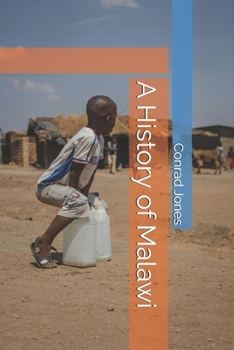
A History of Malawi

This sweeping history chronicles the turbulent and inspiring story of Malawi, a nation known as "The Warm Heart of Africa." The narrative begins with the land itself, carved by the Great Rift Valley and dominated by the magnificent Lake Malawi. It delves into the world of the region's earliest hunter-gatherer inhabitants, the arrival of Bantu-speaking peoples, and the subsequent rise of the great Maravi Empire. This pre-colonial power, whose name meaning "Flames" hints at a vibrant iron-working industry, grew powerful through its control of regional trade routes before fragmenting under internal pressures, creating a power vacuum that would soon be filled by disruptive new forces.
The 19th century brought an era of profound upheaval, as the land was caught between the militaristic Ngoni states migrating from the south and the predatory Swahili-Arab and Yao slave traders expanding from the east. Into this violent cauldron stepped the Scottish missionary David Livingstone, whose horrified accounts of the slave trade galvanized anti-slavery sentiment in Britain and inspired a wave of missionaries to follow in his footsteps. Their arrival, along with that of traders and political agents, set the stage for the Scramble for Africa, culminating in the establishment of the British Central Africa Protectorate, later known as Nyasaland.
Life under colonial rule was a period of deep contradiction. The British suppressed the slave trade but imposed a new system of economic exploitation centered on European-owned tobacco and tea estates and the resented thangata labor system. This book traces the seeds of resistance, from the early, bloody uprising led by John Chilembwe to the rise of a modern nationalist movement. The imposition of the Federation of Rhodesia and Nyasaland proved to be the final catalyst, uniting the people in opposition and bringing to prominence one of African history's most complex figures, Dr. Hastings Kamuzu Banda, who returned from decades abroad to lead the nation to independence in 1964.
The euphoria of independence was short-lived. A dramatic Cabinet Crisis just weeks after liberation consolidated Banda's power and set Malawi on a thirty-year path of austere, one-party autocratic rule. This history details life under the Ngwazi's absolute authority, enforced by the feared Malawi Young Pioneers, and explores his controversial foreign policy and unique model of state-led agricultural capitalism. The narrative then charts the dramatic "winds of change" of the early 1990s-driven by internal courage, economic hardship, and international pressure-that led to a historic referendum and the peaceful dismantling of the one-party state.
Finally, the book explores the nation's journey through a new democratic era. It examines the challenges and triumphs of the presidents who followed Banda, from the dawn of multiparty politics to the struggles with corruption, economic liberalization, and the HIV/AIDS pandemic. It culminates in the dramatic political events of the 21st century, including a historic court ruling that annulled a presidential election and solidified the country's democratic foundations. This is the story of a nation's resilience, a chronicle of its long struggle for freedom and its ongoing quest to build a prosperous future for the "Warm Heart of Africa."
Related Subjects
HistoryCustomer Reviews
ThriftBooks® and the ThriftBooks® logo are registered trademarks of Thrift Books Global, LLC
