


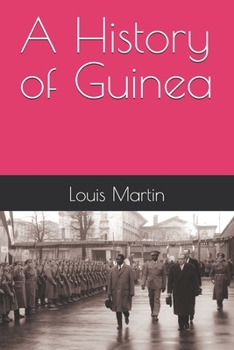
A History of Guinea

From the dramatic moment in 1958 when it became the only French colony to defiantly vote "No" to Charles de Gaulle and choose immediate, impoverished independence, the story of Guinea has been one of proud defiance, immense potential, and tragic paradoxes. This comprehensive history explores the central question that has defined the nation: how can a country blessed with up to a third of the world's bauxite, the largest untapped iron ore deposit on Earth, and the headwaters of West Africa's most vital rivers remain one of the poorest and most volatile nations on the planet? The narrative traces this "resource curse" from its origins to the present day, offering a sweeping account of a nation perpetually at a crossroads.
Long before its dramatic entry onto the world stage, the land known as the "water tower of West Africa" was a vital crossroads of powerful empires. This history delves deep into the pre-colonial past, exploring the influence of the great Ghana, Mali, and Songhai empires on the region's peoples. It chronicles the rise of formidable local states, most notably the theocratic Imamate of Futa Jallon, born from a Fulani jihad, and the fierce resistance to French encroachment led by the legendary warrior-king Samori Tour . This rich tapestry of state-building, faith, and conflict provides the essential backdrop to understanding the modern Guinean identity.
The arrival of Europeans on the coast unleashed the devastating transatlantic slave trade, which reshaped societies for centuries. The narrative then charts the brutal French conquest and the subsequent colonial administration, a system of exploitation built on forced labor and taxation that sowed the seeds of a powerful nationalist movement. This struggle culminates in the rise of Ahmed S kou Tour , the charismatic and ruthless leader who would guide Guinea to independence and then rule for twenty-six years. The book provides a detailed look at his First Republic, a one-party state defined by a radical brand of African socialism, fervent Pan-Africanism, and an increasingly paranoid and bloody dictatorship.
Following Tour 's death, Guinea embarked on a tumultuous journey through decades of military rule under Lansana Cont , a painful transition to a market economy, and a descent into corruption and stagnation. The narrative captures the dramatic upheavals of the 21st century: the massive 2007 general strike, the chaotic 2008 coup led by Moussa Dadis Camara, and the horrific 2009 stadium massacre that shocked the world. It details the country's fragile and violent transition to its first-ever democratic election in 2010 and the subsequent presidency of Alpha Cond , a period marked by initial hopes, the devastating Ebola epidemic, and a controversial third term that ended in yet another military takeover in 2021.
Today, Guinea is once again under military rule, charting an uncertain path forward. This history brings the story right up to the present, examining the junta's aggressive fight against corruption, its bold moves to reclaim control over the nation's mineral wealth, and the landmark trial holding past leaders accountable for crimes against humanity. By weaving together the threads of political intrigue, economic struggle, ethnic tension, and the resilient spirit of the Guinean people, this book offers a definitive and compelling account of one of Africa's most complex and fascinating nations as it confronts its past and struggles to define its future.
Related Subjects
HistoryCustomer Reviews
ThriftBooks® and the ThriftBooks® logo are registered trademarks of Thrift Books Global, LLC
