


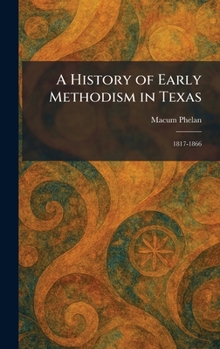
A History of Early Methodism in Texas: 1817-1866

"A History of Early Methodism in Texas, 1817-1866" provides a comprehensive account of the foundational years of the Methodist Church in the Lone Star State. Spanning nearly half a century, this scholarly work traces the spiritual and organizational development of Methodism from its earliest pioneer beginnings through the tumultuous era of the American Civil War. The narrative follows the intrepid circuit riders and early settlers who brought their faith to the Texas frontier, detailing the establishment of missions, the growth of local conferences, and the profound influence of religious institutions on the social fabric of the region.
Through meticulous research, Macum Phelan examines the challenges faced by early religious leaders, including the physical hardships of travel across vast territories and the political shifts during Texas's transition from a republic to statehood. The book highlights the pivotal roles played by key figures in the movement and documents the expansion of schools and churches that served as community cornerstones. This historical study is an essential resource for those interested in the religious history of the American Southwest, offering deep insights into how the Methodist tradition helped shape the cultural and moral identity of early Texas.
This work has been selected by scholars as being culturally important, and is part of the knowledge base of civilization as we know it. This work was reproduced from the original artifact, and remains as true to the original work as possible. Therefore, you may see the original copyright references, library stamps (as most of these works have been housed in our most important libraries around the world), and other notations in the work.
This work is in the public domain in the United States of America, and possibly other nations. Within the United States, you may freely copy and distribute this work, as no entity (individual or corporate) has a copyright on the body of the work.
As a reproduction of a historical artifact, this work may contain missing or blurred pages, poor pictures, errant marks, etc. Scholars believe, and we concur, that this work is important enough to be preserved, reproduced, and made generally available to the public. We appreciate your support of the preservation process, and thank you for being an important part of keeping this knowledge alive and relevant.
Customer Reviews
ThriftBooks ® and the ThriftBooks ® logo are registered trademarks of Thrift Books Global, LLC
