


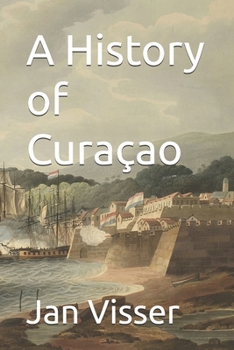
A History of Curaçao

Explore the remarkable story of Cura ao, a small Caribbean island whose history reaches far beyond its shores. From its earliest Arawak and Caquetio inhabitants to the arrival of Spanish explorers, the book traces how a land once dismissed as a "useless island" became a strategic prize in the contest for Caribbean power.
The narrative follows the Dutch conquest of 1634 and the rise of Willemstad as a thriving commercial hub, revealing how trade, architecture, and cultural exchange shaped the island's identity. It also confronts Cura ao's central role in the Atlantic slave trade, the realities of bondage, and the powerful legacy of resistance, including the 1795 revolt led by Tula.
Through chapters on the Sephardic Jewish community, British and French occupations, emancipation, economic hardship, and mass emigration, the book presents Cura ao as a place repeatedly transformed by global forces. The arrival of the oil industry in the twentieth century brought new prosperity, migration, labor struggles, and social change, while World War II once again placed the island at the center of world events.
The story continues through the formation and dissolution of the Netherlands Antilles, the landmark date of 10-10-10, and Cura ao's modern status as an autonomous country within the Kingdom of the Netherlands. Along the way, it highlights the development of Papiamentu, the island's arts, music, festivals, and the ongoing effort to forge a shared national identity.
Rich in historical detail and cultural insight, this book offers a sweeping portrait of Cura ao as a crossroads of Indigenous heritage, European empire, African resilience, Jewish enterprise, Caribbean creativity, and modern political transformation.
Customer Reviews
ThriftBooks ® and the ThriftBooks ® logo are registered trademarks of Thrift Books Global, LLC
