


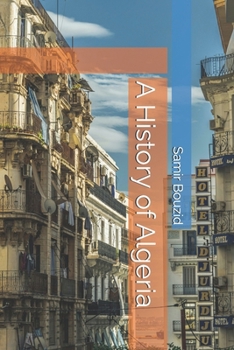
A History of Algeria

From the dawn of history, Algeria has been a land of grand contrasts and a pivotal crossroads of civilizations. This sweeping narrative guides you through its rich and turbulent past, beginning with the indigenous Amazigh people and their powerful Numidian kings who challenged the might of Carthage and Rome. It explores the centuries of Roman rule that transformed the coast into the granary of the empire and produced towering intellectual figures like Saint Augustine. The story continues through the Vandal invasion, the Byzantine reconquest, and the transformative arrival of Arab armies, which brought with them Islam, a new language, and a new culture that would fuse with the Berber bedrock to create a unique North African civilization.
The book chronicles the rise and fall of great Berber dynasties-the Zirids, Hammadids, Almoravids, and Almohads-who forged vast empires and presided over a flourishing of arts and scholarship. It then delves into the three-hundred-year history of the Regency of Algiers, an autonomous and formidable corsair state under the nominal authority of the Ottoman Empire. For centuries, the "Barbary corsairs" of Algiers were the masters of the Mediterranean, their actions shaping the politics and trade of the entire region and making the city a center of both terror and fascination for the maritime nations of Europe.
This long era came to a violent end with the French invasion of 1830, which initiated 132 years of brutal colonial rule. This was not a typical imperial venture, but a project of mass settlement that systematically dispossessed the Algerian people of their land, rights, and identity. The narrative vividly details the fierce Algerian resistance, from the epic struggle of Emir Abdelkader to the rise of modern nationalism in the 20th century. It culminates in the Algerian War of Independence (1954-1962), one of the longest and bloodiest decolonization conflicts, a savage war of attrition that tore French society apart and finally led to a hard-won, triumphant liberation.
The story does not end with independence. It explores the immense challenges of nation-building, from the socialist ambitions and state-led industrialization under leaders Ahmed Ben Bella and Houari Boum di ne to the rise of political Islam. The account unflinchingly examines the descent into the "Black Decade," the devastating civil war of the 1990s that left the nation traumatized. The final chapters bring the reader into the 21st century, detailing the long, stagnant presidency of Abdelaziz Bouteflika, a period of state-enforced amnesia and oil-fueled stability, and the stunning, peaceful uprising of the Hirak movement in 2019, a "Revolution of Smiles" that toppled a dictator and opened a new, uncertain chapter in the perpetual reinvention of this resilient and vital nation.
Related Subjects
HistoryCustomer Reviews
ThriftBooks ® and the ThriftBooks ® logo are registered trademarks of Thrift Books Global, LLC
