


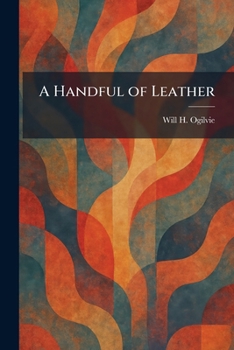
A Handful of Leather

Select Format
Select Condition 
Book Overview
"A Handful of Leather" is a stirring collection of verse that celebrates the timeless bond between rider and horse. Written by the acclaimed poet Will H. Ogilvie, often regarded as the laureate of the equestrian world, these poems capture the rhythm of the gallop, the excitement of the hunt, and the rugged beauty of the open field.
The collection traverses the landscape of the English countryside and beyond, offering vivid portraits of spirited steeds and the adventurous souls who guide them. Through evocative imagery and rhythmic meter, Ogilvie explores themes of endurance, companionship, and the visceral joy of the chase. Whether depicting the tension of a high-stakes race or the quiet dignity of a faithful animal, the work resonates with an authentic love for all things equine.
As a testament to the traditions of horsemanship, "A Handful of Leather" remains a cherished work for lovers of poetry and sporting history alike. Its verses provide a window into an era where the connection to the land was inextricably linked to the saddle, making it an essential read for anyone who has ever felt the pull of the reins and the spirit of the horse.
This work has been selected by scholars as being culturally important, and is part of the knowledge base of civilization as we know it. This work was reproduced from the original artifact, and remains as true to the original work as possible. Therefore, you may see the original copyright references, library stamps (as most of these works have been housed in our most important libraries around the world), and other notations in the work.
This work is in the public domain in the United States of America, and possibly other nations. Within the United States, you may freely copy and distribute this work, as no entity (individual or corporate) has a copyright on the body of the work.
As a reproduction of a historical artifact, this work may contain missing or blurred pages, poor pictures, errant marks, etc. Scholars believe, and we concur, that this work is important enough to be preserved, reproduced, and made generally available to the public. We appreciate your support of the preservation process, and thank you for being an important part of keeping this knowledge alive and relevant.
Customer Reviews
ThriftBooks ® and the ThriftBooks ® logo are registered trademarks of Thrift Books Global, LLC
