
Skip to content
Scan a barcode
Scan
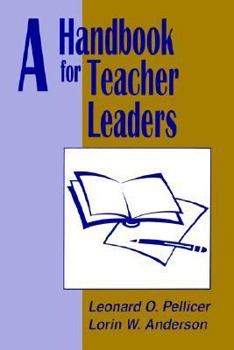
Paperback A Handbook for Teacher Leaders Book

ISBN: 0803961731

ISBN13: 9780803961739

A Handbook for Teacher Leaders

Select Format

Select Condition ThriftBooks Help Icon

Recommended

Format: Paperback

Condition: Very Good

$17.09
Save $23.86!
List Price $40.95
Almost Gone, Only 1 Left!
Save to List

Book Overview

"The authors skillfully present the many ways a PAR approach can be tailored to a given district or school. This book provides a wealth of material to assist any principal, school, or district with its teacher improvement needs."

Peter Airasian, Professor
Boston College

"If you are ready for peer review, Anderson and Pellicer offer the model. If you are trying to make the decision,

Teacher Peer Assistance and Review offers a realistic look at the pros and cons, the do′s and don′ts of this hot topic. A wonderful and unique addition to the literature "
Anna Hicks McFadden, Department of Educational Leadership and Foundations
Western Carolina University

"Anderson and Pellicer offer a thoughtful and fair analysis of peer review as it relates to teaching performance. This is the place to start if improving the overall quality of instruction is important in your school district."

Dal Lawrence, Former President
Toledo Federation of Teachers
Toledo, OH

"In their book, Teacher Peer Assistance and Review, Anderson and Pellicer present a compelling case for involving teachers in the instructional supervision process. They also point out the challenges associated with peer assistance and review and provide the reader with a step-by-step guide for overcoming them. Written in a clear, straightforward style, this book is a must-read for teachers, administrators, and policymakers who are serious about implementing effective peer assistance and review programs."
Aretha B. Pigford, Chair
Department of Educational Leadership and Human Services
Florida A&M University

Improve education through teacher partnerships

Elementary and secondary educators are discovering what higher education faculty have always known--Peer Assistance and Review (PAR) programs work Both new and veteran teachers can improve and update their knowledge and skills by linking with "consulting" teachers who provide support through observation, modeling, and sharing of information. PAR programs can strengthen teacher professionalism, improve teacher quality, and ultimately enhance student learning, if done well.

Anderson and Pellicer, two nationally renowned educators, chart a course for developing and implementing an effective PAR program based on long-standing, successful programs. Easy-to-read sections highlight:

Components of successful teacher peer assistance and review programs Ten essential questions to ask before you begin Criteria, standards, and data Key players and their roles, relationships, and responsibilities Reporting and using the results Best practices from accomplished programs

Useful Web sites, sample forms, job descriptions and applications, and an example of an educational policy trust agreement offer practical, how-to help. Both administrators and teachers interested in understanding and incorporating a Peer Assistance and Review program will find this book an essential guide.

Customer Reviews

1 rating

A Classic Example of Eduspeak

A Handbook for Teacher Leaders gives an excellent example of the common practice of making compelling arguments for changes in schools, with no realistic suggestions for how to achieve the change. The authors' twist is to make an argument not for reform of schools, not for restructuring schools, but for "school renewal" - which is a change "within people" (p 206). Change, they say, cannot occur unless it does not come from external authority, but from "internal obligation" (p 215), which is eduspeak for "teachers volunteer their time".The authors tell us that in order for school renewal to occur,"school leaders must be prepared to shift a major portion of the responsibility for leadership from principals to teachers" (p 14). Some of the many responsibilities they suggest teachers willingly accept are: peer coaching(p 168), peer review of teacher plans(p 83), spending signifigant amounts of planning time with team members (p 41), to design and implement a series of curriculum seminars (p 61), engaging in a curriculum audit (p 62),fundraising (p 67), and act as mentors for less experienced teachers (p 194). These are all excellent ideas, compellingly argued for and the benefits of their implementation is clear. They also, in aggregate, would require hundreds of hours of additional work from every teacher. So, where will these hundreds of hours come from? The authors concede that many CURRENT teacher responsibilities such as planning time and curriculum work "come out of the teachers hides" (p 67). They recognize that most teachers are already so overworked during the school day that "when they plan (as all must do), they do so on their own time" (p 72). So, if teachers are ALREADY donating their own time to teaching and planning, where will the time to implement all of the above programs come from? Teachers, the authors seem to say, should donate the time. Teachers need to begin to think of themselves as professionals,(p 209)(apparently it is a given that teachers don't currently see themselves as professionals), and professionals take responsibility that goes beyond pecuniary gain (p 214). So, we can conclude, I suppose, that it is unprofessional and irresponsible for teachers to expect pecuniary gain for their time. And "responsibility adds words such as moral, trustworthy and rational" (p 215). Does this mean teachers who insist on being paid for their work are also immoral? To be fair, the authors do weakly suggest that money to pay for their ideas could be collected by teachers writing and receiving grants. But the reforms they call for involve huge amounts of time from virtually EVERY teacher, year in and year out. Do they really believe that teachers can be paid for this time by writing grants? The only other suggestion for making the time appears to be to take it from students when they say: "Until policy changes are made in the amount of time allocated to schooling, however, there is really only one option: Educators need
Copyright © 2026 Thriftbooks.com Terms of Use | Privacy Policy | Do Not Sell/Share My Personal Information | Cookie Policy | Cookie Preferences | Accessibility Statement
ThriftBooks® and the ThriftBooks® logo are registered trademarks of Thrift Books Global, LLC

GoDaddy Verified and Secured