


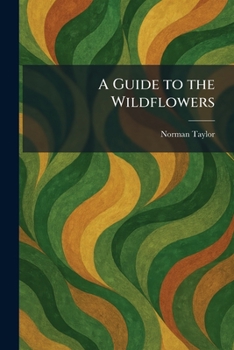
A Guide to the Wildflowers

"A Guide to the Wildflowers" is an essential botanical reference designed for both amateur enthusiasts and seasoned naturalists. Authored by renowned botanist Norman Taylor, this work serves as a comprehensive manual for identifying the diverse array of flowering plants found across the landscape. The guide simplifies the complex world of botany, offering a structured approach to recognizing species through their physical characteristics, habitats, and blooming seasons.
This classic volume emphasizes the beauty and variety of the natural world, providing detailed descriptions that bring each specimen to life. By focusing on clear identification markers, the book empowers readers to explore meadows, forests, and roadsides with a newfound understanding of the flora they encounter. Its historical value lies in its systematic categorization and its contribution to the popularization of nature study during the early twentieth century.
Whether used as a field companion or a household reference, "A Guide to the Wildflowers" remains a testament to the enduring appeal of North American botany. It captures the scientific rigor of the era while maintaining an accessible tone that encourages a deeper appreciation for the environment and the intricate details of wildflower species.
This work has been selected by scholars as being culturally important, and is part of the knowledge base of civilization as we know it. This work was reproduced from the original artifact, and remains as true to the original work as possible. Therefore, you may see the original copyright references, library stamps (as most of these works have been housed in our most important libraries around the world), and other notations in the work.
This work is in the public domain in the United States of America, and possibly other nations. Within the United States, you may freely copy and distribute this work, as no entity (individual or corporate) has a copyright on the body of the work.
As a reproduction of a historical artifact, this work may contain missing or blurred pages, poor pictures, errant marks, etc. Scholars believe, and we concur, that this work is important enough to be preserved, reproduced, and made generally available to the public. We appreciate your support of the preservation process, and thank you for being an important part of keeping this knowledge alive and relevant.
Customer Reviews
ThriftBooks ® and the ThriftBooks ® logo are registered trademarks of Thrift Books Global, LLC
