


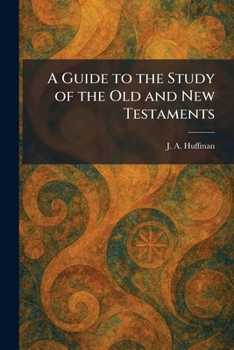
A Guide to the Study of the Old and New Testaments

Select Format
Select Condition 
Book Overview
"A Guide to the Study of the Old and New Testaments" offers a comprehensive and systematic approach to understanding the foundational texts of the Christian faith. This work serves as an essential educational resource, providing readers with a structured pathway through the historical, literary, and spiritual landscapes of both the Old and New Testaments. Jasper Abraham Huffman presents a clear methodology for students and laypeople alike, aiming to bridge the gap between simple reading and profound scriptural analysis.
The guide explores key themes, historical contexts, and the overarching narrative arc that connects the entire biblical canon. By providing essential background information and interpretive frameworks, Huffman assists readers in grasping the complexities of biblical prophecy, law, poetry, and the gospels. This volume is an invaluable tool for anyone seeking to enhance their biblical literacy or engage in disciplined theological study. Its clear organization and insightful commentary make it a timeless reference for personal devotions, classroom settings, or group study, emphasizing the enduring relevance and interconnectedness of the scriptures.
This work has been selected by scholars as being culturally important, and is part of the knowledge base of civilization as we know it. This work was reproduced from the original artifact, and remains as true to the original work as possible. Therefore, you may see the original copyright references, library stamps (as most of these works have been housed in our most important libraries around the world), and other notations in the work.
This work is in the public domain in the United States of America, and possibly other nations. Within the United States, you may freely copy and distribute this work, as no entity (individual or corporate) has a copyright on the body of the work.
As a reproduction of a historical artifact, this work may contain missing or blurred pages, poor pictures, errant marks, etc. Scholars believe, and we concur, that this work is important enough to be preserved, reproduced, and made generally available to the public. We appreciate your support of the preservation process, and thank you for being an important part of keeping this knowledge alive and relevant.
Customer Reviews
ThriftBooks ® and the ThriftBooks ® logo are registered trademarks of Thrift Books Global, LLC
