


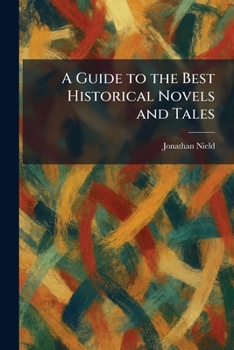
A Guide to the Best Historical Novels and Tales

Select Format
Select Condition 
Book Overview
"A Guide to the Best Historical Novels and Tales" serves as an indispensable reference work for lovers of literature and history alike. Compiled by Jonathan Nield, this comprehensive bibliography offers a meticulous survey of historical fiction, categorizing a vast array of titles by their chronological setting and geographical focus. From the ancient world to the nineteenth century, Nield provides readers with an organized roadmap to the most significant stories that blend fact with imagination.
This scholarly yet accessible guide is designed to help readers, educators, and librarians navigate the expansive landscape of the historical novel. Each entry reflects the author's deep commitment to identifying works that not only entertain but also accurately capture the spirit of their respective eras. By highlighting both well-known classics and obscure gems, the guide remains a vital tool for understanding the evolution of the genre and its role in popularizing history.
Whether you are seeking tales of medieval chivalry, Renaissance intrigue, or the social shifts of the industrial age, "A Guide to the Best Historical Novels and Tales" provides the necessary context to deepen your appreciation of historical storytelling. It stands as a testament to the enduring appeal of the past and the power of fiction to bring history to life.
This work has been selected by scholars as being culturally important, and is part of the knowledge base of civilization as we know it. This work was reproduced from the original artifact, and remains as true to the original work as possible. Therefore, you may see the original copyright references, library stamps (as most of these works have been housed in our most important libraries around the world), and other notations in the work.
This work is in the public domain in the United States of America, and possibly other nations. Within the United States, you may freely copy and distribute this work, as no entity (individual or corporate) has a copyright on the body of the work.
As a reproduction of a historical artifact, this work may contain missing or blurred pages, poor pictures, errant marks, etc. Scholars believe, and we concur, that this work is important enough to be preserved, reproduced, and made generally available to the public. We appreciate your support of the preservation process, and thank you for being an important part of keeping this knowledge alive and relevant.
Related Subjects
Fiction History Literary Criticism Literary Criticism & Collections Literature & FictionCustomer Reviews
ThriftBooks® and the ThriftBooks® logo are registered trademarks of Thrift Books Global, LLC
