


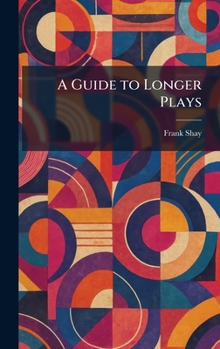
A Guide to Longer Plays

"A Guide to Longer Plays" is a comprehensive reference work designed for theater directors, students of drama, and lovers of the stage. Compiled by Frank Shay, a notable figure in early 20th-century dramatic curation, this volume serves as a practical bibliography of full-length plays. The work was created to assist practitioners and readers in navigating the extensive landscape of dramatic literature, providing a curated selection of scripts suitable for production and academic study.
The guide offers a systematic look at the theatrical repertoire available during a period of significant growth in the performing arts. By focusing on "longer plays," Shay highlights works that offer depth in characterization and narrative complexity, moving beyond the shorter formats common in experimental theater of the era. Each entry provides a valuable resource for identifying plays that meet specific artistic or thematic requirements, making it an indispensable tool for community theater groups and professional organizations alike.
As a historical record of the theater, "A Guide to Longer Plays" reflects the tastes and dramatic standards of its time. It remains a significant resource for those interested in the evolution of stagecraft and the preservation of 20th-century dramatic heritage.
This work has been selected by scholars as being culturally important, and is part of the knowledge base of civilization as we know it. This work was reproduced from the original artifact, and remains as true to the original work as possible. Therefore, you may see the original copyright references, library stamps (as most of these works have been housed in our most important libraries around the world), and other notations in the work.
This work is in the public domain in the United States of America, and possibly other nations. Within the United States, you may freely copy and distribute this work, as no entity (individual or corporate) has a copyright on the body of the work.
As a reproduction of a historical artifact, this work may contain missing or blurred pages, poor pictures, errant marks, etc. Scholars believe, and we concur, that this work is important enough to be preserved, reproduced, and made generally available to the public. We appreciate your support of the preservation process, and thank you for being an important part of keeping this knowledge alive and relevant.
Customer Reviews
ThriftBooks ® and the ThriftBooks ® logo are registered trademarks of Thrift Books Global, LLC
