


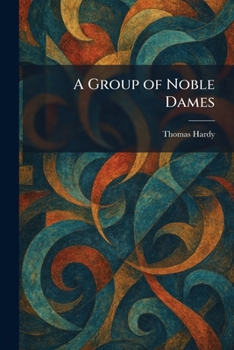
A Group of Noble Dames

Select Format
Select Condition 
Book Overview
"A Group of Noble Dames" is a compelling collection of short stories by the acclaimed novelist and poet Thomas Hardy. Set against the rich, historical backdrop of his fictional Wessex, these tales are presented through a unique narrative frame: they are recounted by members of a local field club seeking shelter from the rain. Each story focuses on the life and legacy of a high-born woman from the region's past, weaving together elements of folklore, genealogy, and social observation.
Hardy masterfully explores the intricate dynamics of marriage, class, and reputation, often highlighting the tragic ironies and constraints faced by women within the British aristocracy. From clandestine romances to family scandals and the heavy burden of ancestral expectations, the narratives provide a nuanced look at the human heart under the pressures of social decorum. Characters such as the Duchess of Hamptonshire and the Marchioness of Stonehenge are rendered with psychological depth and vivid detail. "A Group of Noble Dames" is a vital work that showcases Hardy's talent for short fiction and his enduring fascination with the interplay between personal desire and historical circumstance.
This work has been selected by scholars as being culturally important, and is part of the knowledge base of civilization as we know it. This work was reproduced from the original artifact, and remains as true to the original work as possible. Therefore, you may see the original copyright references, library stamps (as most of these works have been housed in our most important libraries around the world), and other notations in the work.
This work is in the public domain in the United States of America, and possibly other nations. Within the United States, you may freely copy and distribute this work, as no entity (individual or corporate) has a copyright on the body of the work.
As a reproduction of a historical artifact, this work may contain missing or blurred pages, poor pictures, errant marks, etc. Scholars believe, and we concur, that this work is important enough to be preserved, reproduced, and made generally available to the public. We appreciate your support of the preservation process, and thank you for being an important part of keeping this knowledge alive and relevant.
Customer Reviews
ThriftBooks ® and the ThriftBooks ® logo are registered trademarks of Thrift Books Global, LLC
