


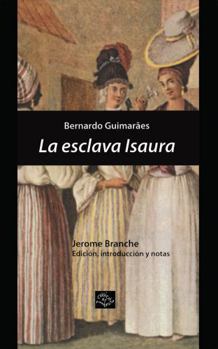
La Esclava Isaura
No Customer Reviews

This novel by Guimar es tells the story of the emancipation of an enslaved woman in Brazil in the first third of the 19th century and is rescued by a wealthy man who falls in love with her. Recognized as one of the few novels with an abolitionist theme in Brazil in the 19th century, La esclava Isaura (Isaura, the slave) (1875), also advances the idea of the right of the individual, even the enslaved, to love and the dignity of their spirit, and protests against the ideas inherited from the social primacy of wealth and ancestry, themes that had been claimed since the literature of the renaissance and that had gained greater momentum with the Enlightenment. The contradiction that limits the liberating ideological projection of this work by Guimar es, however, lies in the racial theme and in the very definition of abolitionism. As the narrator emphasises that the enslavement suffered by his mixed-race heroine is unjust because she is 'too white' to be enslaved, he reveals a tacit approval of the normalisation of the relationship between so-called blacks and slave subjectivity. Despite its abolitionist premise, the book ignores the great masses of enslaved Africans and Afro-Creoles in Brazil. This stance places Guimar es side by side with the rest of the 19th century Brazilian intellectuals regarding the issue of slavery and contributes to forming the founding narrative of the nation.
Format:Paperback
Language:English
ISBN:B0CC2BWPFH
ISBN13:9781930744400
Release Date:January 2009
Publisher:Instituto Internacional de Literatura Iberoam
Length:275 Pages
Weight:0.60 lbs.
Dimensions:0.6" x 5.0" x 8.0"
Customer Reviews
0 rating
Copyright © 2026 Thriftbooks.com Terms of Use
| Privacy Policy | Do Not
Sell/Share My Personal Information | Cookie Policy | Cookie Preferences | Accessibility Statement
ThriftBooks® and the ThriftBooks® logo are registered trademarks of Thrift Books Global, LLC
ThriftBooks® and the ThriftBooks® logo are registered trademarks of Thrift Books Global, LLC
