


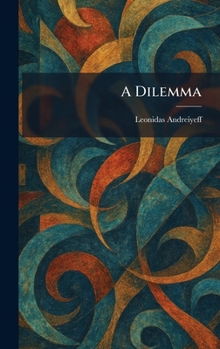
A Dilemma

"A Dilemma" is a haunting psychological novella that delves into the dark recesses of the human psyche. Written by the renowned Russian author Leonidas Andreiyeff (Leonid Andreyev), the story centers on Dr. Kerzhentsev, a brilliant but detached intellectual who carefully plans and executes the murder of a friend who had married the woman he once loved. The core of the narrative is not the crime itself, but the harrowing mental aftermath. Kerzhentsev attempts to feign madness to escape legal consequences, only to find himself trapped in a terrifying existential crisis: is he merely acting insane, or has his mind truly fractured under the weight of his actions?
This masterfully crafted work explores themes of alienation, the limits of human reason, and the thin veneer of civilization that masks primal impulses. Andreiyeff's prose captures the claustrophobic tension of a man struggling to maintain control over his own reality. "A Dilemma" remains a compelling study of guilt and the fragility of the ego, offering readers a profound reflection on the nature of truth and the mysteries of the subconscious. It is a quintessential example of Russian Silver Age literature, blending elements of the psychological thriller with deep philosophical inquiry.
This work has been selected by scholars as being culturally important, and is part of the knowledge base of civilization as we know it. This work was reproduced from the original artifact, and remains as true to the original work as possible. Therefore, you may see the original copyright references, library stamps (as most of these works have been housed in our most important libraries around the world), and other notations in the work.
This work is in the public domain in the United States of America, and possibly other nations. Within the United States, you may freely copy and distribute this work, as no entity (individual or corporate) has a copyright on the body of the work.
As a reproduction of a historical artifact, this work may contain missing or blurred pages, poor pictures, errant marks, etc. Scholars believe, and we concur, that this work is important enough to be preserved, reproduced, and made generally available to the public. We appreciate your support of the preservation process, and thank you for being an important part of keeping this knowledge alive and relevant.
Customer Reviews
ThriftBooks ® and the ThriftBooks ® logo are registered trademarks of Thrift Books Global, LLC
