


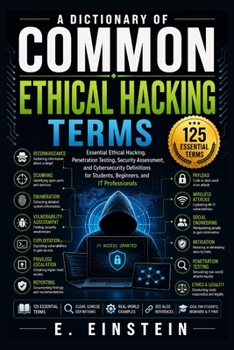
A Dictionary of Common Ethical Hacking Terms: Essential Ethical Hacking, Penetration Testing, Security Assessment, and Cybersecurity Definitions for S

Build a stronger understanding of ethical hacking one essential term at a time.
A Dictionary of Common Ethical Hacking Terms is a practical reference containing 125 carefully selected definitions from ethical hacking, penetration testing, vulnerability assessment, reconnaissance, web application security, network testing, social engineering, and security reporting.
Written for students, beginners, career changers, cybersecurity learners, and working IT professionals, this dictionary explains technical language in a clear and approachable format without assuming extensive prior experience.
Each entry includes:
A concise, professionally written definitionA practical example showing how the term is usedRelated terms for continued learningExpanded forms for important acronyms and abbreviationsReaders will explore essential concepts such as:
Attack surfaces, attack paths, and attack vectorsBlack-box, gray-box, and white-box testingReconnaissance, enumeration, and service discoveryVulnerabilities, exploits, and proofs of conceptAuthentication and access-control weaknessesWeb and network penetration testingPrivilege escalation and lateral movementRisk ratings, remediation, and retestingScope, authorization, and rules of engagementCommon security tools and professional methodologiesWhether you are preparing for cybersecurity training, studying for an entry-level certification, beginning a penetration-testing course, or strengthening your professional vocabulary, this reference provides a dependable foundation for understanding the language of authorized security testing.
Learn the terminology. Understand the methodology. Build your cybersecurity foundation.
Customer Reviews
ThriftBooks ® and the ThriftBooks ® logo are registered trademarks of Thrift Books Global, LLC
