


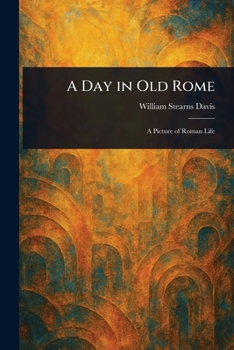
A Day in Old Rome

Step into the vibrant world of antiquity with William Stearns Davis's masterful work, "A day in old Rome." Subtitled "a picture of Roman life," this enduring volume offers unparalleled exploration into ancient Roman civilization. Davis meticulously reconstructs the daily existence of its citizens, from the bustling Forum to domestic scenes.
Delve into the fascinating social customs, traditions, and routines that shaped one of history's most powerful empires. "A day in old Rome" illuminates the everyday habits, public spectacles, and private lives of Romans, providing a vivid and authentic portrayal of their society. Readers will gain deep insights into Roman life's structure, from its grand institutions to household minutiae. This classic text serves as an essential guide for anyone seeking a comprehensive understanding of Ancient Rome's social history and cultural fabric. Through engaging detail, Davis brings the past to life, inviting you to witness the timeless customs and daily rhythm of a vanished world. It is a cornerstone for appreciating the enduring legacy of Roman civilization.This work has been selected by scholars as being culturally important, and is part of the knowledge base of civilization as we know it.
This work is in the public domain in the United States of America, and possibly other nations. Within the United States, you may freely copy and distribute this work, as no entity (individual or corporate) has a copyright on the body of the work.
Scholars believe, and we concur, that this work is important enough to be preserved, reproduced, and made generally available to the public. We appreciate your support of the preservation process, and thank you for being an important part of keeping this knowledge alive and relevant.
Customer Reviews
ThriftBooks ® and the ThriftBooks ® logo are registered trademarks of Thrift Books Global, LLC
