


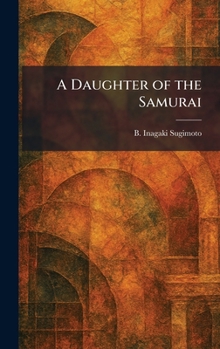
A Daughter of the Samurai

"A Daughter of the Samurai" is a poignant and illuminating memoir that offers a rare bridge between the feudal traditions of Old Japan and the rapidly modernizing world of the early twentieth century.
The narrative follows the upbringing of a girl born into a high-ranking samurai household in the snowy north of Japan, where she was raised under the strict codes of her class. As Japan undergoes profound societal transformations during the Meiji Restoration, the author's path leads her from the disciplined seclusion of her ancestral home to the bustling, unfamiliar landscapes of the United States. Through evocative storytelling, the work explores themes of duty, family honor, and the challenges of cultural adaptation.
The book provides detailed insights into the rituals, philosophies, and daily life of the samurai class-a world that was fading even as the author lived within it. Her journey to America as a young bride introduces a fascinating cross-cultural perspective, navigating the complexities of maintaining her heritage while embracing a new Western identity. This work remains a classic of literature, celebrated for its grace, historical depth, and its gentle yet powerful exploration of the female experience in a time of global upheaval.
This work has been selected by scholars as being culturally important, and is part of the knowledge base of civilization as we know it. This work was reproduced from the original artifact, and remains as true to the original work as possible. Therefore, you may see the original copyright references, library stamps (as most of these works have been housed in our most important libraries around the world), and other notations in the work.
This work is in the public domain in the United States of America, and possibly other nations. Within the United States, you may freely copy and distribute this work, as no entity (individual or corporate) has a copyright on the body of the work.
As a reproduction of a historical artifact, this work may contain missing or blurred pages, poor pictures, errant marks, etc. Scholars believe, and we concur, that this work is important enough to be preserved, reproduced, and made generally available to the public. We appreciate your support of the preservation process, and thank you for being an important part of keeping this knowledge alive and relevant.
Customer Reviews
ThriftBooks ® and the ThriftBooks ® logo are registered trademarks of Thrift Books Global, LLC
