


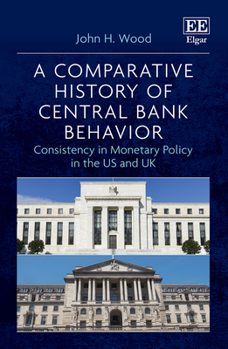
A Comparative History of Central Bank Behavior: Consistency in Monetary Policy in the US and UK
No Customer Reviews

It is widely believed that central banks have grown (the Bank of England) or were established (the Federal Reserve) to pursue the twin objectives of monetary and price stability. But why should they? Central bankers are people, too, whose behavior is presumably determined, like the rest of us, by their incentives and the information available to them. The author explores this question. Two sets of data confirm the reservations. Central banks have often worsened, even initiated, monetary instabilities by bailing out the risk-takers and their effects on prices, which depending on the quantities of money created by central banks, have often been catastrophic. The evidence suggests that central bankers have really been in business to support the politically powerful upon whose favors they depend, particularly high-spending governments and needy financial institutions. The book consists of several examples of this behavior and its consistency during wars and financial crises in the UK and US over the course of the last two centuries. Professors and students of finance will find A Comparative History of Central Bank Behavior to be a compelling and thoughtful exploration of how central banks have historically responded to and influenced financial markets.
Format:Hardcover
Language:English
ISBN:1803926597
ISBN13:9781803926599
Release Date:November 2022
Publisher:Edward Elgar Publishing
Length:312 Pages
Weight:1.25 lbs.
Dimensions:9.5" x 0.8" x 6.3"
Customer Reviews
0 rating
Copyright © 2026 Thriftbooks.com
Terms of Use | Privacy Policy | Do Not Sell/Share My Personal Information | Cookie Notice | Cookie Preferences | Accessibility Statement
ThriftBooks ® and the ThriftBooks ® logo are registered trademarks of Thrift Books Global, LLC
ThriftBooks ® and the ThriftBooks ® logo are registered trademarks of Thrift Books Global, LLC
