


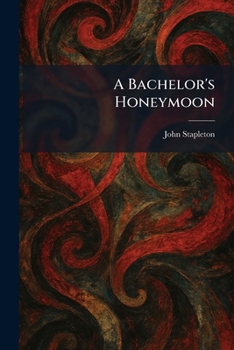
A Bachelor's Honeymoon

"A Bachelor's Honeymoon" is a spirited farcical comedy in three acts by John Stapleton. This classic play explores the humorous complications and frantic deceptions that arise when a secret marriage is threatened by the unexpected arrival of family and friends. The plot centers on a man who, having secretly wed a music-hall performer, must go to outrageous lengths to keep his marital status hidden from his judgmental social circle to avoid scandal.
As the protagonist navigates a web of his own making, the situation quickly devolves into a series of frantic misunderstandings, physical comedy, and sharp-witted dialogue characteristic of the late Victorian and Edwardian stage. "A Bachelor's Honeymoon" is a quintessential example of the drawing-room farce, emphasizing themes of domestic secrecy, social respectability, and the chaotic nature of romantic entanglements. With its quick pacing and theatrical charm, the work offers a delightful look at the comedic conventions that entertained audiences during the early 20th century. This play stands as a significant piece of dramatic history, showcasing the enduring appeal of mistaken identities and the pursuit of love against all odds.
This work has been selected by scholars as being culturally important, and is part of the knowledge base of civilization as we know it. This work was reproduced from the original artifact, and remains as true to the original work as possible. Therefore, you may see the original copyright references, library stamps (as most of these works have been housed in our most important libraries around the world), and other notations in the work.
This work is in the public domain in the United States of America, and possibly other nations. Within the United States, you may freely copy and distribute this work, as no entity (individual or corporate) has a copyright on the body of the work.
As a reproduction of a historical artifact, this work may contain missing or blurred pages, poor pictures, errant marks, etc. Scholars believe, and we concur, that this work is important enough to be preserved, reproduced, and made generally available to the public. We appreciate your support of the preservation process, and thank you for being an important part of keeping this knowledge alive and relevant.
Related Subjects
DramaCustomer Reviews
ThriftBooks ® and the ThriftBooks ® logo are registered trademarks of Thrift Books Global, LLC
