


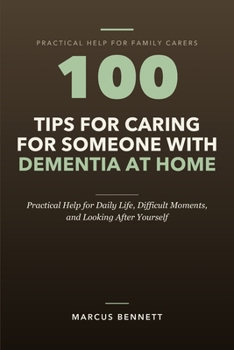
100 Tips for Caring for Someone with Dementia at Home: Practical Help for Daily Life, Difficult Moments, and Looking After Yourself

Families are sent home with a diagnosis, a leaflet, and very little idea of what Tuesday afternoon is going to be like. This book is the practical part: what to say when the same question comes for the ninth time, what to do when washing becomes a fight, and how to keep going without losing yourself in it.
One hundred specific things to try. Each takes a page or two and ends with one action. Written to be read in five minutes, because that may be all you have.
InsideWhy arguing with a false belief always fails - and the three-step answer that works insteadHow to make washing, dressing and eating easier by changing the room rather than the personWhat agitation is usually telling you, and how to find the cause behind the behaviourSundowning, night waking, and how to get more sleep yourselfActivities that still work when memory does not, and how to protect dignity in every oneCarer guilt, anger and grief - why you feel all three, and what actually helpsThe legal paperwork with a deadline nobody warns you aboutHow to ask for help, what assessments exist, and when to consider residential care without shameWritten for the person doing itSet in large, clear type. No jargon and no lectures. It does not explain the neuroscience of dementia - the person's doctor handles the medicine, and this book handles the afternoon.
There is a whole chapter on looking after yourself, because carers who last are not the ones who tried hardest. They are the ones who set up something they could actually keep doing.
What you are doing is hard and largely unwitnessed, and you are almost certainly doing it better than you think.
Customer Reviews
ThriftBooks ® and the ThriftBooks ® logo are registered trademarks of Thrift Books Global, LLC
