


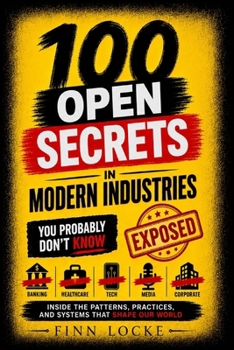
100 Open Secrets in Modern Industries You Probably Don't Know: Inside the Patterns, Practices, and Systems That Shape Our World

Every industry has its rules. Some are written. Most are hidden.
Your loyalty card knew you were pregnant before your family did. The "extra virgin" olive oil on your shelf probably isn't either. The orange juice marketed as "fresh" sat in a tank for a year. Your veterinarian works for a candy company. Your health insurance claim was denied in less time than it took to read this sentence - by an algorithm, not a doctor.
These aren't conspiracy theories. They are documented industry practices, sitting in plain sight in court records, FTC consent orders, settled class actions, and the companies' own public filings. Most consumers have never encountered them. The industries running them are not in a hurry to point them out.
100 Open Secrets in Modern Industries pulls back the curtain on the practices that quietly shape your daily life - what's actually in the box, who actually owns the brand, where the fees actually go, and how the systems behind them have been engineered to favor everyone except you.
Inside, you'll discover:
The retailer that built a pregnancy-prediction algorithm so accurate it outed teenagers to their own parentsThe three middlemen who decide what your prescription costsThe candy giant quietly running one of the world's largest networks of veterinary hospitalsThe "non-profit" hospital that sued thousands of its own patientsThe diamond engagement tradition invented by an ad agency in 1947The fast-food chain that almost brought surge pricing to your lunchThe CAPTCHA test that trained the AI now replacing the workers who solved itAnd 93 more - spanning food, healthcare, finance, insurance, real estate, travel, retail, technology, education, and the major life moments where consumers are most easily caught off guard.
Each of the ten sections opens with a short introduction to the industry's territory. Each chapter ends with three questions worth asking the next time you're a customer. And every factual claim is paraphrased from public investigations, federal regulatory orders, court filings, and companies' own disclosures - with the complete sources listed by chapter at the back of the book.
You don't need to be paranoid to read this book. You just need to be curious about what's actually happening when you swipe the card, sign the contract, fill the prescription, and pay the bill.
The more you understand, the better choices you make.
Customer Reviews
ThriftBooks ® and the ThriftBooks ® logo are registered trademarks of Thrift Books Global, LLC
