


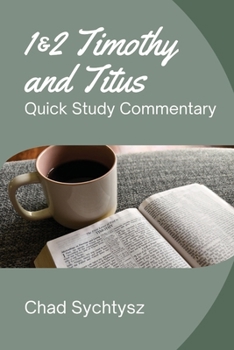
1 & 2 Timothy and Titus Quick Study Commentary

If you preach, teach, or lead in any capacity in a local church, these three letters belong on your short list. First and Second Timothy and Titus-what scholars call the "pastoral epistles"-are Paul at his most practical. He's writing to two men he personally trained, in the middle of real ministry situations, dealing with false teaching, church organization, and the kind of everyday chaos that congregations have always faced. Sound familiar?
Chad Sychtysz's Quick Study Commentary works through all three letters in serious depth-208 pages covering everything from elder qualifications to the role of women in the assembly to Paul's haunting final words from death row in 2 Timothy 4. This isn't a devotional read. It's a commentary built for people who actually need to understand these texts and teach them well.
What separates this from a lot of commentaries in this space is the historical grounding. You'll get a full introduction to each letter-the city of Ephesus, the island of Crete, the political climate, the specific heresies Paul was fighting-before a single verse is opened. That context changes how you read everything that follows.
And Sychtysz doesn't skip the hard passages. He tackles them directly.
Topics covered include:
Paul's warnings about false teaching and "speculative intellectualism" in the churchInstructions for women in the assembly (1 Tim. 2:9-15) - handled carefully and thoroughlyQualifications for elders and deacons (1 Tim. 3 and Titus 1) - with an appendix on the debated "believing children" phrase in Titus 1:6The role of widows, older men, older women, and younger women in the bodyThe "coming apostasy" in 2 Timothy 3 and how to stand firm in itTwo appendices address passages that churches actually argue about: who the "women" are in 1 Timothy 3:11, and what "believing children" means in the elder qualifications of Titus 1:6.
Customer Reviews
ThriftBooks ® and the ThriftBooks ® logo are registered trademarks of Thrift Books Global, LLC
