


< Back to Search Results
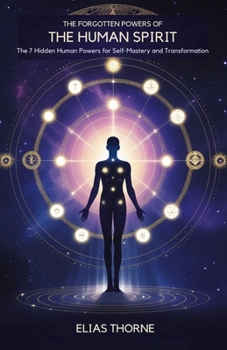
The Forgotten Powers of the Human Spirit: The 7 Hidden Human Powers for Self-Mastery and Transformation

Most books about psychic abilities are either complete woo-woo nonsense or academic skepticism that dismisses every unexplained experience you've ever had. This one doesn't pretend to have lab-verified proof of telepathy, but it also doesn't gaslight you about that d j vu that felt too specific to be coincidence.
Here's what actually matters: Esoteric traditions across cultures-from Hermetic philosophy to Tibetan dream yoga-have described similar human capacities for millennia. Whether these are literal abilities or powerful psychological frameworks is honestly still up for debate. What's documented is that practices like focused visualization, energy awareness, and altered states produce subjective experiences that many find meaningful, even if science can't yet measure them.
What you'll get in this book:
A systematic framework for seven specific practices (telepathy, clairvoyance, intuition, will-focused intention, precognition, energy healing, and astral projection)Historical context from actual mystery school teachings and mystical traditionsSpecific exercises for each "power" with clear instructionsHonest discussion of what's psychological, what's potentially paranormal, and where those lines blurPractical applications that don't require you to quit your job or abandon critical thinkingThe book won't turn you into a superhero. It won't prove the existence of chi or validate every conspiracy theory about suppressed human potential. It will give you structured methods to explore states of consciousness that most modern education completely ignores.
My approach is simple: I've spent years working with consciousness practices-meditation, lucid dreaming, energy awareness techniques. Some experiences feel genuinely anomalous. Others are clearly psychological but still useful. I can't prove astral projection is "real," but the practice of consciously navigating dream states has value regardless of metaphysical claims. Same with intuition development or reading subtle social cues some call "telepathy."
The practices work as practices, even if we're still arguing about why.
Will it work for you? Only one way to find out. Start with the practices that feel least outlandish, track your results honestly, and see what happens when you take your subjective experience seriously without abandoning critical thinking.
The forgotten powers might just be forgotten attention.
Customer Reviews
ThriftBooks ® and the ThriftBooks ® logo are registered trademarks of Thrift Books Global, LLC
