


< Back to Search Results
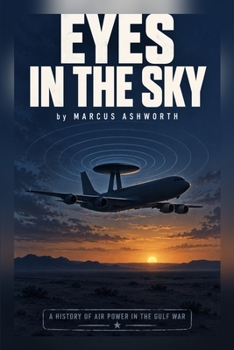
Eyes in the Sky

They called it "the eyes in the sky" - the unarmed radar plane that quietly ran the most one-sided air war of the modern era.
When Operation Desert Storm began on January 17, 1991, the world watched stealth fighters and smart bombs on live television. What it didn't see was the E-3 Sentry AWACS aircraft orbiting high above the desert, where a small crew of radar controllers built and managed the tactical picture that let coalition pilots dominate the skies with historically low losses.
Eyes in the Sky is a narrative history of that invisible campaign: how a converted airliner carrying a rotating radar dome became the nerve center of coalition air superiority, and how the men and women who flew it, hour after hour, made possible the six-week air war that crippled Iraq's military before a single coalition tank crossed the border.
Grounded in the well-documented public record of the Gulf War and the AWACS program, this book moves from the technology and doctrine behind airborne battle management, through the crisis that brought the fleet to Saudi Arabia, the opening night of the war, the sustained bombing campaign, and the hundred-hour ground offensive that ended it - always keeping the radar screens and the controllers behind them at the center of the story.
What's inside:
- How the E-3 Sentry's radar and rotodome actually worked, and why altitude solved a problem ground radar never could
- The coalition-building and command structure that let more than a dozen air forces fly one coordinated war
- A detailed account of the campaign's phases, from suppressing Iraqi air defenses to the final ground offensive
- The human side of the mission: training, fatigue, the psychological weight of directing other pilots into danger, and the risk of fratricide
- A clear-eyed look at what historians still debate about the war's air campaign, and what its lessons meant for the decades that followed
- A glossary of military and aviation terms and a full chronology of the crisis and the war
Related Subjects
HistoryCustomer Reviews
ThriftBooks ® and the ThriftBooks ® logo are registered trademarks of Thrift Books Global, LLC
