


< Back to Search Results
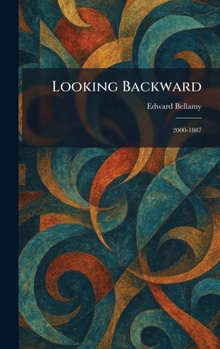
Looking Backward: 2000-1887

Select Format
Select Condition 
Book Overview
"Looking Backward 2000-1887" is a seminal work of utopian science fiction and social commentary that captures the imaginative spirit of the late nineteenth century. The narrative follows Julian West, a young Bostonian who falls into a deep, hypnotic sleep in 1887 and awakens in the year 2000. He discovers a radically transformed world-a peaceful, socialist society where the industrial inefficiencies and social inequalities of his past have been replaced by a system of cooperation, collective ownership, and shared prosperity.
Edward Bellamy's vision of the future explores profound themes of economic reform, human progress, and the potential for a more just social order. Through West's observations and his enlightening conversations with Dr. Leete, the novel details the mechanics of this new civilization, including the concept of the "Industrial Army" and the total elimination of poverty. As one of the most influential and widely read American novels of its era, "Looking Backward 2000-1887" remains a thought-provoking examination of societal evolution and the enduring human quest for a perfect world. This masterpiece of speculative fiction continues to challenge readers to reflect on the organization of modern life and the possibilities for a better future.
This work has been selected by scholars as being culturally important, and is part of the knowledge base of civilization as we know it. This work was reproduced from the original artifact, and remains as true to the original work as possible. Therefore, you may see the original copyright references, library stamps (as most of these works have been housed in our most important libraries around the world), and other notations in the work.
This work is in the public domain in the United States of America, and possibly other nations. Within the United States, you may freely copy and distribute this work, as no entity (individual or corporate) has a copyright on the body of the work.
As a reproduction of a historical artifact, this work may contain missing or blurred pages, poor pictures, errant marks, etc. Scholars believe, and we concur, that this work is important enough to be preserved, reproduced, and made generally available to the public. We appreciate your support of the preservation process, and thank you for being an important part of keeping this knowledge alive and relevant.
Customer Reviews
A wonderful escape from our late capitalist nightmare
Amazing condition!
Fast shipment
A must read for anyone seeking an alternative to the system of corp. greed.
Amazing
Classic
A warmly human and enlightening read
ThriftBooks ® and the ThriftBooks ® logo are registered trademarks of Thrift Books Global, LLC
