


< Back to Search Results
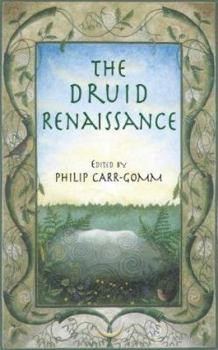
The Druid Renaissance: The Voice of Druidry Today


Select Format
Select Condition 
Book Overview
The Druid tradition lies at the heart of Western spirituality and today it is experiencing a renaissance unprecedented in its long history. The Druids, like the Native Americans and Aborigines, revere... This description may be from another edition of this product.
Format:Paperback
Language:English
ISBN:1855384809
ISBN13:9781855384804
Release Date:January 1998
Publisher:Thorsons Pub
Length:303 Pages
Weight:0.92 lbs.
Dimensions:8.8" x 1.0" x 5.5"
Related Subjects
Druidism Earth-Based Religions Occult Religion Religion & Spirituality Wicca WitchcraftCustomer Reviews
4 ratings
Lanterns That Light the Path of Druidry.
Published by Thriftbooks.com User , 20 years ago
The Druid Renaissance, edited by Philip Carr-Gomm, is a collection of writings by the likes of such well-known persons as Isaac Bonewits, Louise Larkins Bradford, Robert Mills, and Dr. Gordon Strachan. From these writings we are given some idea of what it means to be a Druid in the modern world. Quoting from the text: "To be a Druid today means following a path which reverences Nature, and which honors an inheritance of lore and tradition which includes the observation of eight seasonal festivals, and working with gods and goddesses, sacred trees and animals. In ancient times, Druids were sages, philosophers, judges and advisors to Kings and Queens. Today, when someone calls themselves a Druid, it can mean either that they feel in sympathy with the ideals of the ancient Druids, and celebrate the eight seasonal festivals, or that they are a member of a Druid Order, whose origins may go back to 1717 AD, or which may have been formed more recently." (p.71 Bonewits) I find however that there is more to modern Druidry than an affinity for the ideals of the ancient Druids and celebrating the eight seasonal festivals. The path of Druidry is also to master those things that are unseen and forgotten by the common man. It is said of the Tuatha De Danann, that they were in the northern islands of the world, studying occult lore, secret knowledge, sorcery and diabolic arts, witchcraft and magical skills, until they surpassed the sages of the pagan arts. These things and more are on the path of Druidry in the modern day. It is important however that as we study the arcane arts that we keep in mind that the Druids were a social class of intellectuals and artists. They had counterparts in other cultures (such as the Brahmans of India), yet it was only in the Celtic Culture that they were called Druids. "They were of both genders and had several sub-classes, such as Bards, sacrificers, healers, diviners, and judges. They were polytheists, not monotheists, and it is probably true that they did offer human sacrifices from time to time. However, they did not build Stonehenge or the pyramids, did not all have long white beards, did not come from Atlantis, and probably few of them had golden sickles. These Druids functioned primarily as the transmitters of knowledge and culture from one generation to the next, and as performers and supervisors of the ceremonies they believed necessary to keep the forces of chaos at bay." (p.75 Bonewits) To delude ourselves into believing the myths created students of pagan arts in the past 50 or 60 years is to stray far from the path of Druidry, as it was in the past or as it should be today. Druidry and the modern practice of Wicca are not the same thing and should never be mixed. Even Gerald Gardner, one of the founders of Wicca, in his book "The Meaning of Witchcraft" (1959) stated that Druidry and Wicca are separate practices. They simply do not have a common root. What then is it that the modern Druid s
A diverse presentation of Neo-pagan druidism
Published by Thriftbooks.com User , 26 years ago
As with any anthology, the real power of the book lies in the few gems scattered amongst the semi-precious stones of the majority of the writing, and the overall balance and diversity represented by the full cross-section of opinion presented. Carr-Gomm should be saluted for providing commentary from a wide range of authors from organizations outside of his own.Part I: The Call of the Land was itself worth the price of the book for me. It represents the best of what makes druidism a religion for the future as well as the past.
Carr-Gomm's reader friendly presentation of modern Druidry
Published by Thriftbooks.com User , 27 years ago
The most informative source book about contemporary Druidism I've found. Druidic history is addressed unabashedly; even the less popular aspects are discussed and dissected in a comprehensive, informative manner.
An inspiring and comprehensive view of modern Druidry
Published by Thriftbooks.com User , 27 years ago
The Druid Rennaissance affords an inspiring and comprehensive view of contemporary Druidry, which is emerging as a major spiritual pathway for the coming millenium. In one well-produced volume, Philip Carr-Gomm, chosen chief of the Order of Bards, Ovates, and Druids (OBOD), has, thanks to a judicious choice of contributing authors and an effective organization of the texts, succeeded in conveying a clear understanding of what modern Druidry, grounded in a rich heritage of tradition, is and how it relates to other western and oriental currents of thought. A must for all those, whether familiar or unfamiliar with the subject, who seek an authoritative and eminently readable presentation of Druid thought today.
Copyright © 2026 Thriftbooks.com
Terms of Use | Privacy Policy | Do Not Sell/Share My Personal Information | Cookie Policy | Cookie Preferences | Accessibility Statement
ThriftBooks ® and the ThriftBooks ® logo are registered trademarks of Thrift Books Global, LLC
ThriftBooks ® and the ThriftBooks ® logo are registered trademarks of Thrift Books Global, LLC
