


< Back to Search Results
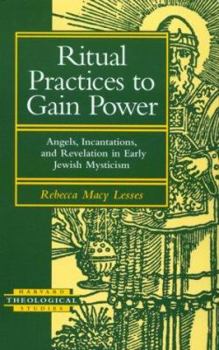
Ritual Practices to Gain Power: Angels, Incantations, and Revelation in Early Jewish Mysticism (Harvard Theological Studies)

This study focuses on adjurations or elaborate ritual performances that form a part of the early Jewish mystical literature known as the Hekhalot literature, stemming from Palestine and Babylon in the... This description may be from another edition of this product.
Format:Paperback
Language:English
ISBN:1563382199
ISBN13:9781563382192
Release Date:January 1997
Publisher:Trinity Pr Intl
Length:429 Pages
Weight:1.40 lbs.
Dimensions:8.8" x 1.3" x 5.8"
Customer Reviews
1 rating
Ian Myles Slater on: Angels, Students, and Magic
Published by Thriftbooks.com User , 21 years ago
This is a deeply impressive, rewarding, but also difficult work. "Ritual Practices to Gain Power" is a description in recent use for some of the procedures that are commonly referred to as "magic," a designation with many problems. The book is aimed at readers already familiar with studies of Jewish mystical and magical texts of late antiquity and the early middle ages, and their non-Jewish (pagan, Gnostic, and Christian) counterparts. Lesses provides excellent bibliographic guides and useful summaries of previous scholarship, but I suspect that a reader not already familiar with both post-Biblical Judaism in general and at least some studies of the mystical and magical fringes of Rabbinic Judaism in particular will be baffled. Which is to say that the book is aimed at serious scholars, and those willing to read serious scholarship, even if they are not equipped to contribute to it themselves. For these, and for those willing to familiarize themselves with the basic literature, the book should be worth their time and effort. Lesses considers such issues as asceticism and ritual purity from points of view not often treated in discussions of Rabbinic thought, namely, their role as sources of power and access to knowledge. The practices Lesses describes and analyses may seem surprising to many readers. They do not fit well into some of the standard models of Jewish history. The emergence of an elite based on mastery of knowledge, rather than inherited status and the performance of public rituals was, from our perspective, a democratization. This is an attractive simplification. The basic Rabbinic legal code, "The Mishnah," was originally supposed to be transmitted in oral form alone. The debates over its rulings, which allowed the development of a body of learning ultimately embodied in the Talmud (actually, two Talmuds), was also supposed to be purely oral, which meant learning by rote from living teachers. All were eventually committed to writing, and made the basis of further written commentaries and codes. Even after printing made texts more readily available, however, the process of learning this material was (and is) difficult. In the earliest stages, those without the economic resources to spend years in study, and those students who found the memorization of recited traditions an insurmountable obstacle, must surely have been anything but happy with the situation. Social standing, not to mention intimacy with God, seemed to be just out of reach. One way out for those so frustrated was the pursuit of knowledge through other means, including ritual practices. Goals ranged from acquiring angelic aid in memorization, to actual inspiration by the "Prince of Torah" -- knowing the answers without the bother of studying. (I suspect that rituals for the former purpose may sometimes have seemed to work; the intense concentration required by these rituals must have been good training in themselves, and their performance a builder of confidence.
Copyright © 2026 Thriftbooks.com
Terms of Use | Privacy Policy | Do Not Sell/Share My Personal Information | Cookie Policy | Cookie Preferences | Accessibility Statement
ThriftBooks ® and the ThriftBooks ® logo are registered trademarks of Thrift Books Global, LLC
ThriftBooks ® and the ThriftBooks ® logo are registered trademarks of Thrift Books Global, LLC
