Skip to content
Scan a barcode
Scan
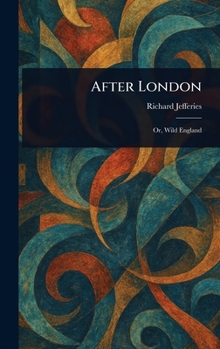
Hardcover After London Book

ISBN: 1022956574

ISBN13: 9781022956575

After London

Select Format

Select Condition ThriftBooks Help Icon

Recommended

Format: Hardcover

Condition: New

$32.95
Ships within 2-3 days
Save to List

Book Overview

Richard Jefferies' "After London: Wild England" paints a haunting vision of a post-apocalyptic future. Centuries after a cataclysmic event decimates civilization, England has regressed to a pre-industrial state. This seminal work of dystopian fiction explores the themes of civilization collapse and the return to a more primitive existence.

Focusing on environmental fiction, "After London" imagines a landscape reclaimed by nature. This classic tale delves into the societal shifts and human adaptations necessary for survival in a world where the structures and technologies of the past are lost. Explore a future England where the echoes of a forgotten era linger amidst a transformed and untamed wilderness. "After London" remains a powerful and thought-provoking exploration of humanity's relationship with nature and the fragility of civilization.

This work has been selected by scholars as being culturally important, and is part of the knowledge base of civilization as we know it.

This work is in the public domain in the United States of America, and possibly other nations. Within the United States, you may freely copy and distribute this work, as no entity (individual or corporate) has a copyright on the body of the work.

Scholars believe, and we concur, that this work is important enough to be preserved, reproduced, and made generally available to the public. We appreciate your support of the preservation process, and thank you for being an important part of keeping this knowledge alive and relevant.

Customer Reviews

4 ratings

The Fall is Near.

After London, first published in 1885, starts off with tons of information of England after the fall of advanced civilization. Chapters on the animals, plants, people and the landscape is then followed by the story of Felix. The middle son of a Baron, he is neither good with a sword nor has an income. He is smart, sometimes too smart, an armchair intelligence, he seems to find fault with everybody and everything. In the Dark Age society in which he lives in he is an uncommon boy. He sees the filth of the cities, the unorganized governments and the untamed wilderness as things that can be improved on. Yet he is in no position to do anything about it. The character of Felix seems childish, paranoid, pushy and sometimes downright whiny. In other words, very realistic and the kind of boy you sometimes see on the Internet making blogs that give advice to everybody else on how to fix everything. Coming of age, in other words. And he is doing it all for love. The book has heavily influenced later works. You can see it in the settings and backgrounds of many of today's books, movies and even TV series. For example, in the book A Scientific Romance by Ronald Wright the author acknowledges this work as one of the many that helped shape the story. Many sci-fi books about the future of man or the fall of man try to copy the flavor and broad scope of After London, using it sometimes without giving credit. Such as Legacy of The Daleks by John Peel, set in the 22nd Century, in which the Earth is recovering from the Dalek invasion of the planet. In this Dr. WHO book Knights and Lords fight over the remains London (and Southern England) with a mixture of technology. Guns and cars are used along side horses and lances. Wonderful, needed in any library, new or used.

A Leafy Future

It would probably be accurate to call "After London" a botanist's delight. Richard Jefferies describes in great detail a world of the far future in which the wonders of our own civilization are mostly forgotten, or seen as fables. (Until Heinrich Schliemann dug up the ruins, the city of Troy was a legend also. Can we be certain that Atlantis was a legend?) Much of England is covered in forests, the relics of our own civilization buried under thickets and shrubbery. London, once a centre of culture and trade, is long gone. Society has become medieval once more. Skills like reading and writing have been preserved, but these are forbidden to all but the nobles. Slavery is common and wars between cities are frequent. It is almost certain that John Christopher has read this book. If you read the "Tripods" trilogy and the "Prince in Waiting" trilogy, you will see certain similarities. In many of the post-technological stories I've read the one invention of ours that gets mentioned the most is the railroad, possibly because it helped us conquer the tyranny of distance, and made the world more accessible. In the early pages of "After London" the railroad is mentioned, though not by name, and references are made regarding our ability to communicate over a great distance with wires.The main character in "After London" is 25-year old Felix, a sensitive character living in a world that has no place for sensitivity. Often ridiculed for his interest in learning rather than war and hunting, Felix carries out a plan to strike out on his own by embarking on a journey of discovery. Eventually Felix does make something of himself and greatness is thrust upon him. A barbarous future is often imagined for us after a nuclear war or some other cataclysm, but in "After London" the cause of our decline is obscure and hazy. We can't be certain that the society in "After London" will eventually reach the heights from which it had fallen. Most of our inventions, like the light bulb and penicillin, were accidents. There was an ancient civilization that could produce metal of a better quality than we can produce now, but the skill is lost."After London" is a very descriptive novel with minimal dialogue. It is more concerned with the world it portrays than the characters who inhabit it. This is a pivotal work in the post-holocaust genre.

An England after some catastrophic event

This 19th-century science fiction novel by Richard Jefferies (1848-1887), an English writer and naturalist, depicts an England of the distant future in which most of the human populace has either died from some cataclysmic event or plague or they have been removed to some other place. The people still living in England have no record of what happened, the event occurring centuries earlier. Most of the central part of the British Isle is now covered by a giant lake. A poisonous swamp covers the site of old London. Much of the novel is a description of this future England. The people live in a feudal-like environment and the hero of the story, Felix, sets out on a quest in a canoe to find fame and fortune so that he may win the hand of the daughter of a neighboring baron. This is probably one of the earliest novels (if not the earliest) depicting a future Earth following some cataclysmic event. This "sub-genre" or sub-category will form a significant portion of the science fiction literature. Any serious student of science fiction literature should read it.

Post-apocalyptic rebirth, and oral history of the future

After London is variously a phoenix-like rebirth of civilization, a critique of Victorian mediaevalism, a paradigm of fin de siecle fears of regression and atavism, a frontier adventure story, and an exploration of the fragility of historicism. Take your pick. Or don't. But read it.
Copyright © 2026 Thriftbooks.com Terms of Use | Privacy Policy | Do Not Sell/Share My Personal Information | Cookie Notice | Cookie Preferences | Accessibility Statement
ThriftBooks ® and the ThriftBooks ® logo are registered trademarks of Thrift Books Global, LLC

GoDaddy Verified and Secured