Skip to content
Scan a barcode
Scan
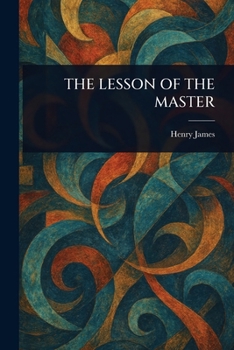
Paperback The Lesson of the Master Book

ISBN: 1022958046

ISBN13: 9781022958043

The Lesson of the Master

Select Format

Select Condition ThriftBooks Help Icon

Recommended

Format: Paperback

Condition: New

$18.24
Ships within 2-3 days
Save to List

Book Overview

Henry James's "The Lesson of the Master" explores the complex relationships between authors and the intricacies of artistic mentorship. This meticulously prepared edition brings to life a classic of literary fiction, delving into the psychological landscape of writers and their evolving connections.

Through the lens of a short story, James examines the profound impact mentors have on aspiring artists, navigating the nuances of guidance, influence, and the sometimes-humorous realities of the literary world. Experience the timeless exploration of these relationships as the master imparts his wisdom, offering a lesson that resonates far beyond the realm of fiction. "The Lesson of the Master" provides a glimpse into the artistic process and the enduring power of human connection.

This work has been selected by scholars as being culturally important, and is part of the knowledge base of civilization as we know it.

This work is in the public domain in the United States of America, and possibly other nations. Within the United States, you may freely copy and distribute this work, as no entity (individual or corporate) has a copyright on the body of the work.

Scholars believe, and we concur, that this work is important enough to be preserved, reproduced, and made generally available to the public. We appreciate your support of the preservation process, and thank you for being an important part of keeping this knowledge alive and relevant.

Customer Reviews

1 rating

Both Stories Have Surprise Endings - Read the Reviews Later

My review pertains to The Turn of the Screw & The Lesson of the Master by Henry James, published by Prometheus Books (1996). The Turn of the Screw makes up the first 134 pages; The Lesson of the Master is considerably shorter, only 74 pages. There is a short, general overview of the career of Henry James, but no specific analysis of either of the two stories is provided. The Lesson of the Master (1892): The young writer Paul Overt deeply admires the highly respected novelist Henry St. George, although Overt does recognize that while the latest works by St. George are quite good, they are lacking in that spark of genius found in his earlier novels. In turn, St. George recognizes the potential for greatness in Paul Overt, a potential that can only be achieved if Overt is willing to sacrifice everything - even his growing attraction, perhaps love - for a vivacious, intellectual, stimulating, young woman. St. George himself is married and with two successful sons, and argues that the true artist can never achieve greatness if he becomes distracted by marriage and family. He does not regret his own choice, but he stresses that Overt must make this decision for himself. The Lesson of the Master is perhaps less complex, and less ambiguous than other works by Henry James, but the ending offers both surprise and irony. The consequences of Paul Overt's choice are unexpected. The Turn of Screw(1898): A reader new to this classic work should read no reviews, no essays, no forwards, and no prefaces. I made that mistake. Without going into details, my first reading of The Turn of the Screw was unduly influenced by my knowing too much too soon. There will be plenty of time after your first reading to immerse yourself in literary criticism and reader reviews. The primary interpretation is straight-forward. Henry James clearly intended The Turn of the Screw to be just what it seems to be: a well-constructed, frightening, bona fide ghost story. There is much evidence for this argument including various notes and letters written by Henry James himself. Most readers probably subscribe to this view on their first reading. A second interpretation challenges the veracity of the story teller, the children's governess, arguing that the ghosts are bizarre imaginings, hallucinations, of a mentally disturbed young woman. While early criticism was founded on newly popular Freudian analysis, later supporters of this interpretation focused largely on inconsistencies in her account. Critics also point to supporting evidence in Henry James's sometimes ambiguous notes and letters. It is quite remarkable that after a century of literary criticism there is still no agreement among general readers, nor among scholars. The Turn of the Screw is a work of genius, a genius that likely had considerable enjoyment developing this complex tale. James has seemingly done the impossible: he created an exceptionally good ghost story while simultaneously leaving subtle evidence for
Copyright © 2026 Thriftbooks.com Terms of Use | Privacy Policy | Do Not Sell/Share My Personal Information | Cookie Notice | Cookie Preferences | Accessibility Statement
ThriftBooks ® and the ThriftBooks ® logo are registered trademarks of Thrift Books Global, LLC

GoDaddy Verified and Secured