


< Back to Search Results
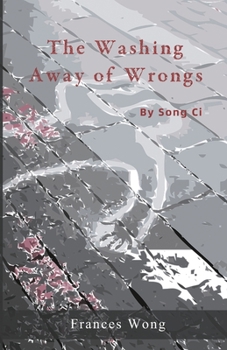
The Washing Away of Wrongs


Select Format
Select Condition 
Book Overview
"The Washing Away of Wrongs" is a book about forensic medicine in ancient China. It is an important work in forensic medicine written by Song Ci during the Ming Dynasty. The book records his experiences and observations in forensic practice. Presented in the form of case studies, it introduces methods for investigating and autopsying various abnormal deaths and techniques for inferring causes of death based on corpse evidence and physical signs. It holds significant significance in developing and studying ancient forensic medicine, providing valuable references for subsequent forensic practices. "The Washing Away of Wrongs" is considered an important classic in Chinese forensic medicine.
Format:Paperback
Language:English
ISBN:1957144815
ISBN13:9781957144818
Release Date:June 2023
Publisher:Asian Culture Press
Length:136 Pages
Weight:0.36 lbs.
Dimensions:0.3" x 5.5" x 8.5"
Customer Reviews
1 rating
the first forensic guide
Published by Thriftbooks.com User , 17 years ago
_The Washing Away of Wrongs_ is a guide to Song dynasty (10th - 13th century) bureaucrats investigating questionable deaths. Considered the first treatise on forensics, it is an interesting read, both for its technical merits and for its historical value. As a historian who has a cursory interest in forensic anthropology, it doubly caught my eye. Initally the book outlines the responsibilities of the official,proceedures for medical examination and specific advice on questioning suspects, interviewing familiy members and reminding investigators of the consequences of making false accusations. This is followed by a detailed primer on how to begin an investigation of suspicious death, beginning with examining the disposition of the body, examining orifices, ways of determining whether the corpse was moved and clues to possible causes of death. Forensically, the richest part of the text was its section titled "Difficult Cases", which expained how an official could find facts when the cause of death appears to be something else (for example, when strangulation was masked as suicide by hanging, or an intentional drowning was made to look like an accident.) A pharmacopaeia is also provided to make obscure injuries appear. A detailed description of determining time of death by the rate of decomposition is disucssed as well. Certainly forensic science has advanced by leaps and bounds since the first publication of _The Washing Away of Wrongs_, yet I was struck by how the foundations of good forensic work has not changed, from the method of determining self-inflicted wounds and suicide (determined by the directionality of incisions or the disposition of the body), to the recommendation that tiny details be not overlooked (for example looking underneath fingernails or in various orifices for clues of foul-play.) An Asian maxim says, "China is the ocean that salts all rivers that flow into it." _The Washing Away of Wrongs_ certainly is one example of many of the tremendous influence Chinese science has had on the rest of the world. Admittedly the appeal of the book is narrow, but it was a fascinating intellectual exercise.
Copyright © 2026 Thriftbooks.com
Terms of Use | Privacy Policy | Do Not Sell/Share My Personal Information | Cookie Notice | Cookie Preferences | Accessibility Statement
ThriftBooks ® and the ThriftBooks ® logo are registered trademarks of Thrift Books Global, LLC
ThriftBooks ® and the ThriftBooks ® logo are registered trademarks of Thrift Books Global, LLC
