Skip to content
Scan a barcode
Scan
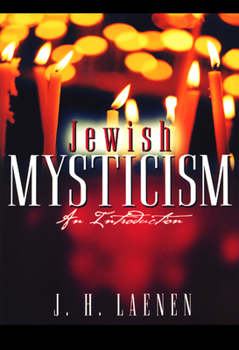
Paperback Jewish Mysticism Book

ISBN: 0664224571

ISBN13: 9780664224578

Jewish Mysticism

Jewish mysticism can be quite a puzzle to the uninitiated. For example, does the term "mysticism" mean the same thing here as in other contexts? Also, in what sense are the various phenomena that come under this heading really "Jewish"? In a thorough historical overview of the movements and trends in Jewish mysticism, Dutch scholar J.H. Laenen takes us step by step through the centuries of development to the present day, explaining how the various currents of tradition are related. We are introduced to Hekhaloth mysticism, classical Kabbalah, Lurianic Kabbalah, and the messianism of Shabbetai Zevi, as well as Hasidism, and we are given explanations of the Doctrine of the Sephiroth, reincarnation, language mysticism, numerology, and symbolism.

Recommended

Format: Paperback

Condition: New

$34.62
Save $15.38!
List Price $50.00
Ships within 2-3 days
Save to List

Customer Reviews

2 ratings

Good overview of the history of Jewish mysticism...

Jewish mysticism is a popular topic these days, especially with the controversy over Hollywood's fascination with the topic. In Jewish Mysticism: An Introduction, Laenen cuts through the pop Kabbalism and delves into this highly esoteric subject. The first section of the book covers the earliest Jewish mystics, the Merkavah Riders, who were influenced by the neoplatonists and gnostics, and continues into a study of pre and post-Zoharic Kabbalah, the tradition typically thought of as Jewish mysticism today, as well as the 12th and 13th century German Hasids (not to be confused with the later Hasidic movement). From there, Laenen explores Isaac Luria's exposition of the Kabbalah and his messianism, which paved the way for the rise of false messiah Sabbatai Zevi, who started a mass movement in the Ottoman Empire that would be felt even until the early 20th century. The book concludes with a discussion of the Baal Shem Tov and Hasidism's rise, a brief overview of the Hebrew traditions of "langauge mysticism", and a chapter on popular books and authors to avoid (paying special attention to Christian and Hermetic occultists, who have their own distinct brand of Kabbalistic lore). Overall, this is a strong, easy to follow introduction to the history of Jewish mysticism, with a brief introduction to the metaphysics of Jewish mysticism. It is not, however, a guide to practice of any sort, and doesn't delve extensively into the metaphysics of the Kabbalah or Merkava materials.

The introduction to Jewish mysticism you are looking for.

An immense and conflicted literature has been published on Jewish mysticism, and the prospect of reading it can be quite daunting. This new volume by J. H. Laenen provides an excellent introduction to the subject and a guide to further study. It was first published in Dutch in 1998. Laenen's study is comprehensive. It covers two millennia of Jewish literature form early chariot-throne mysticism to the Hasidic masters. It is clearly written with frequent summaries and references to earlier traditions. Interpretation of the material has led to many disputes among present-day scholars of Judaism. Laenen conscientiously summarizes the different viewpoints, especially on the significance of Sabbatianism and the origin and development of Hasidism. There is also an extensive bibliography. In an effort to give a clear, comprehensible outline, Laenen makes rather broad generalizations throughout the book (e.g., early Kabbalists were not interested in mystic ascent on p. 139). Students of the New Testament will be disappointed to find that Laenen did not pay more attention scholars who argue for its possible connections with Jewish mysticism. He ignores Alan Segal's recent work on Paul and emphatically states that there was no real mystical activity in Second Temple Judaism (prior to the third century CE; pp. 21-22, 38). Laenen also ignores recent studies on divine Wisdom (Hokhmah, Sophia) in the Old and New Testaments and states that the idea of a female aspect in God was entirely new as late as the twelfth century (p. 88). It should be noted that Laenen's main interest is in the early modern period, not in biblical literature. Laenen's survey does not give any actual samples of Jewish mystical literature, and does not even mention important texts like Israel Ba'al Shem Tov's autobiographical letter to his brother-in-law, R. Gershon of Kuty. All things considered, this book is by far the best recent introduction to the subject of Jewish mysticism. Hopefully its readers will go on to read more specialized works like those of Joseph Dan and Moshe Idel. And it would be good to supplement it with several anthologies like Louis Jacob's Jewish Mystical Testimonies or those in the Classics of Western Spirituality series.
Copyright © 2026 Thriftbooks.com Terms of Use | Privacy Policy | Do Not Sell/Share My Personal Information | Cookie Policy | Cookie Preferences | Accessibility Statement
ThriftBooks® and the ThriftBooks® logo are registered trademarks of Thrift Books Global, LLC

GoDaddy Verified and Secured