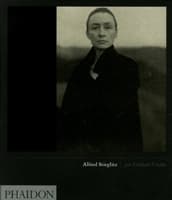
How do we read a photograph? In this rich and fascinating work, Graham Clarke gives a clear and incisive account of the photograph's historical development, and elucidates the insights of the most engaging thinkers on the subject, such as Roland Barthes and Susan Sontag. From the first misty "heliograph" taken by Joseph Nicephore Niepce in 1826 to the classic compositions of Cartier-Bresson and Alfred Steiglitz and the striking postmodern strategies of Robert Mapplethorpe, Clarke provides a groundbreaking examination of photography's main subject areas--landscape, the city, portraiture, the body, and reportage--as well as a detailed analysis of exemplary images in terms of their cultural and ideological contexts. With over 130 illustrations, The Photograph offers a series of discussions of major themes and genres providing an up-to-date introduction to the history of photography and creating a record of the most dazzling, penetrating, and pervasive images of our time.
In defense of Mr. Clarke I offer the following: Photography is one of the most philosophically difficult art forms. Sure, one can apply similar aesthetic concepts and ideas--both formal and conceptual--to the photograph that one can to paintings and sculpture, but there are ideas that set the photograph apart from these other media. This is what people like Clark and Michael Fried are trying to do in their approach to photography. And, apropos of Oxford (especially this series), this is, after all, a scholarly work; not a survey of the coolest photographs of the last forty years. You cannot fault the book or the writer for not doing what you want it or him to do. That being said, the History of Art series by Oxford is precisely where one should go should one choose to ask the "whys" of art--not the who's, the what's or the how's. And, I'm sorry, but "why" questions and answers typically do not suppose a leisurely read. This is not to exalt these questions, nor denigrate the others, only to elucidate the playing field.
0
★★★★☆
Absolute silence...
By Thriftbooks.com User, February 6, 2007
I need absolute silence and maximum concentration to read this book, because it's written in a very complicated style. Have to read a lot of pages twice. Jump back, read again. Once I unscrambled the content (I'm not through yet though) so far, it is very interesting (to me as a non-art student). As an art-student you will probably know all this already. Still interesting to me.
0
★★★★★
The Photograph by Graham Clarke
By Thriftbooks.com User, June 2, 2000
While no criticsm can be complete, this book offers one of the best points of departure for anyone trying to understand the history of the photograph. It is at times outdated in its thinking, but it is always thought provoking. If you're serious about looking at photographs, you must read this book.