


< Back to Search Results
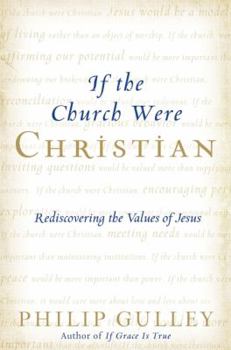
If the Church Were Christian: Rediscovering the Values of Jesus

Select Format
Select Condition 
Book Overview
There are roughly 39,000 Christian denominations, each with a slightly different take on the priorities of Jesus but all--whether liberal or conservative--believe they most faithfully follow Jesus.
The idea that religious liberty is under siege has changed the dynamics of Christianity. Politics and religion are no longer separate, and the intersection has created controversial views of Christians and the church. Quaker minister Philip Gulley, author of If Grace Is True and If God Is Love, addresses the ultimate question in If the Church Were Christian--does the church truly reflect the priorities of Jesus.
Gulley questions the assumptions Christians often make:
- We cannot assume that the gospel versions of Jesus's story are historically accurate since they were written 30 to 60 years after the death of Jesus
- We cannot assume there is universal agreement on the meaning of Jesus's story
- We cannot assume that everyone has the same understanding of what "doing our Christian duty" actually means--even if we believe we should be virtuous and good
If the Church were Christian reminds us that whatever the word Christianity might have meant at one time it doesn't necessarily mean that anymore. Gulley discusses if the church were Christian:
- It would care more about love and less about sex
- Jesus would be a model for living rather than an object of worship
- Meeting needs would be more important than maintaining institutions
- Affirming our potential would be more important than condemning our brokenness
- This life would be more important than the afterlife
This book is for anyone who wants to build bridges instead of boundaries, and seeks to experience God's love.
Customer Reviews
Incandescent !!!!
Looking for God In All the Wrong Places!!!
What the church should be, but usually isn't
Profound, honest, insightful, forthright and healing
Kudos to Philip Gulley!
ThriftBooks ® and the ThriftBooks ® logo are registered trademarks of Thrift Books Global, LLC
