


< Back to Search Results
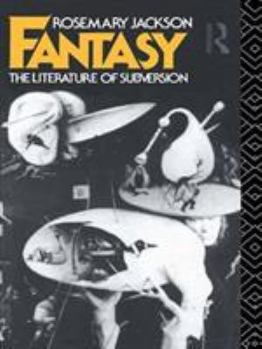
Fantasy: The Literature of Subversion

Select Format
Select Condition 
Book Overview
This study argues against vague interpretations of fantasy as mere escapism and seeks to define it as a distinct kind of narrative. A general theoretical section introduces recent work on fantasy, notably Tzventan Todorov's The Fantastic: A Structural Approach to a Literary Genre (1973). Dr Jackson, however, extends Todorov's ideas to include aspects of psychoanalytical theory. Seeing fantasy as primarily an expression of unconscious drives, she stresses the importance of the writings of Freud and subsequent theorists when analysing recurrent themes, such as doubling or multiplying selves, mirror images, metamorphosis and bodily disintegration. l Gothic fiction, classic Victorian fantasies, the 'fantastic realism' of Dickens and Dostoevsky, tales by Mary Shelley, James Hogg, E.T.A. Hoffmann, George Eliot, Henry James, Joseph Conrad, R.L. Stevenson, Franz Kafka, Mervyn Peake and Thomas Pynchon are among the texts covered. Through a reading of these frequently disquieting works, Dr Jackson moves towards a definition of fantasy expressing cultural unease. These issues are discussed in relation to a wide range of fantasies with varying images of desire and disenchantment.
Format:Hardcover
Language:English
ISBN:1138837121
ISBN13:9781138837126
Release Date:July 2015
Publisher:Routledge
Length:224 Pages
Customer Reviews
1 rating
Totally fantastic!
Published by Thriftbooks.com User , 25 years ago
This is one of my favorite theory books, not too heavy handed and some really thoughtful work. I just loved it, espically Dr. Jackson's ideas about the Faust and Frankenstien legands. Anyone who's looking for something to start with regarding the fantasy and horror genres should really pick this one up. It's really great!
Copyright © 2026 Thriftbooks.com
Terms of Use | Privacy Policy | Do Not Sell/Share My Personal Information | Cookie Policy | Cookie Preferences | Accessibility Statement
ThriftBooks ® and the ThriftBooks ® logo are registered trademarks of Thrift Books Global, LLC
ThriftBooks ® and the ThriftBooks ® logo are registered trademarks of Thrift Books Global, LLC
