


Most Popular Books
Similar Authors To Tom O'Neill
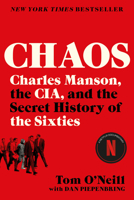
Chaos
$12.29 - $70.99
Shark Tank: A Novel
$7.89 - $18.35
Old Friends: The Lost Tales of Fionn Mac Cumhaill
$5.89
Why the Center Can't Hold: A Diagnosis of Puritanized America
$26.73
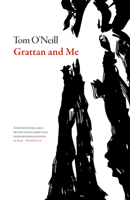
Grattan and Me
$13.19 - $16.08

How to Play Bad Golf
Out of Stock
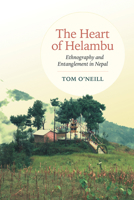
The Heart of Helambu: Ethnography and Entanglement in Nepal
$38.18
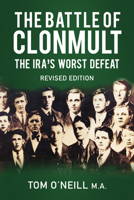
The Battle of Clonmult
Out of Stock
Across Tom O’Neill’s work, the through-line is pressure: on institutions, on public stories, on the comfortable version of events. Some titles come in like a punchline; others read like a case file. Together they suggest a writer willing to follow a question past the point where it stays polite. If you come for neat conclusions, you may find instead the bracing pleasure of accumulation: documents, contradictions, the sense of a narrative rebuilt from the studs. His bibliography doesn’t settle into one lane: true-crime reportage, a novel, cultural diagnosis, and ethnography.
In Chaos, the title promises disorder and hints at design. The subtitle sets the scope, Charles Manson, the CIA, and the secret history of the sixties, and treats the official narrative as a starting point. It asks for alertness, noticing how motives blur and how power protects itself by making the record messy. Less a tidy whodunit than a tense walk through the machinery around a notorious story.
Shark Tank: A Novel announces its intent with its grin. The phrase carries a whole ecosystem: competition, predation, money as sport. As a novel, it suggests O’Neill turning from the archive to the arena, free to shape pace and scene, a reminder that his fascination with systems can be rendered as plot as well as argument.
Why the Center Can’t Hold: A Diagnosis of Puritanized America doesn’t pretend to be neutral. “Diagnosis” implies symptoms, causes, and a willingness to name what’s wrong; “puritanized” is loaded with moral surveillance and the way fear can dress itself up as virtue. This is the O’Neill who argues and frames, drawing a line from cultural habits to political outcomes.
With The Heart of Helambu: Ethnography and Entanglement in Nepal, the vocabulary shifts. “Ethnography” signals close observation and respect for context; “entanglement” suggests the observer isn’t outside the story. The drama is quieter here: how people make meaning, how communities hold together, how place shapes what can be said.
Old Friends: The Lost Tales of Fionn Mac Cumhaill points toward myth, retelling, and the long afterlife of legend. “Lost tales” carries a campfire promise: stories recovered, reimagined, given a new telling. Placed alongside his investigative work, it’s a reminder that narrative isn’t only something to interrogate; it’s also something to inherit and pass along, for readers drawn to folklore and the pleasures of story itself.
There’s a particular momentum across O’Neill’s titles: the sense that the surface explanation is never the whole explanation. Even when the subject changes, the books stay attentive to what gets hidden in plain sight, the incentive behind a public stance, the quiet rule inside a community, the moral that survives because it keeps being retold. That makes them good companions for readers who like a pencil nearby, because the ideas tend to branch.
If you’re looking to buy Tom O’Neill books, you can find great low-cost copies on ThriftBooks.
