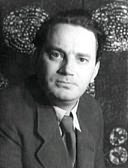
A larger than life figure -- like his contemporary, Ernest Hemingway -- Thomas Wolfe embodied a particularly American vision of the restless and eager writer, taking in the totality of his life experience and turning it into a gigantic, unwieldy vision in prose. With the publication of his semiautobiographical Look Homeward, Angel in 1929, Wolfe announced his dramatic entrance on the stage of modern fiction; but an early death made his exit sadly premature.

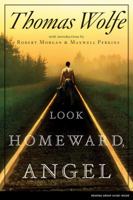
Look Homeward, Angel: A Story of the Buried Life
$5.59 - $51.92

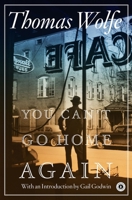
You Can't Go Home Again
$3.59 - $56.49

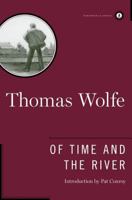
Of Time and the River: A Legend of Man's Hunger in His Youth
$7.99 - $78.19

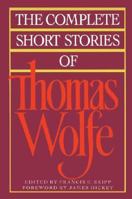
The Complete Short Stories Of Thomas Wolfe
$12.49 - $32.68

The Web and the Rock
$8.29 - $15.79

A Treasury of Civil War Stories
$6.79

The Hills Beyond (Voices of the South)
$7.29 - $24.59

The Lost Boy: A Novella
$7.19 - $27.24

A Stone, a Leaf, a Door: Poems
$7.79 - $39.19

O Lost
$11.09

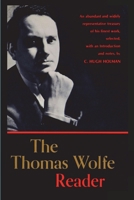
The Thomas Wolfe Reader
$9.49 - $26.37

From Death to Morning
$7.79 - $17.79

Only the Dead Know Brooklyn
$8.19 - $17.89

The Autobiography of an American Novelist
$10.39

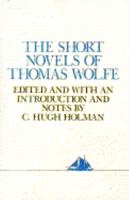
Short Novels of Thomas Wolfe

$24.59 - $28.09

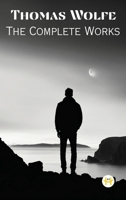
Thomas Wolfe: The Complete Works
$30.72 - $34.99

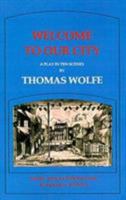
Welcome to Our City
$20.29 - $25.00

The Good Child's River
$10.69 - $45.79

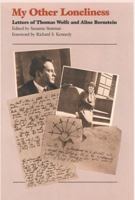
My Other Loneliness: Letters of Thomas Wolfe and Aline Bernstein

$15.99 - $52.47

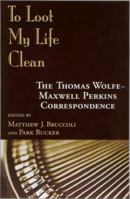
To Loot My Life Clean : The Thomas Wolfe-Maxwell Perkins Correspondence
$9.69

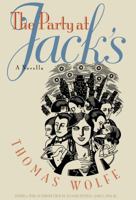
The Party at Jack's
$50.00

The Four Lost Men: The Previously Unpublished Long Version, Including the Original Short Story
$9.09

Thirty Three Ways Seven Faiths Agree with Meher Baba
$11.69 - $21.35

POEMS of Wordsworth and Coleridge
Out of Stock

The Web and the Root
$8.09 - $14.65

33 Ways 7 Faiths Agree with the Quakers
$17.99 - $19.65

The Story of a Novel
$31.79

Thomas Wolfe's Civil War
$15.79

The Letters of Thomas Wolfe.
Out of Stock

Look Homeward, Angel: A Story of a Buried Life
$16.22
Thomas Wolfe came into modern fiction with a book that refused to be modest. His work moves the way memory moves when it’s allowed to run: one moment sharp as a snapshot, the next swelling into a long, searching paragraph that wants to hold everything at once. He was a larger than life figure, and his pages behave the same way, expansive, hungry, sometimes unwieldy, always reaching for the totality of lived experience. He embodies a restless, eager American vision of the writer, turning the whole of his life into a gigantic prose vision. In 1929 his semiautobiographical Look Homeward, Angel: A Story of the Buried Life announced his dramatic entrance on the stage of modern fiction, an arc later marked by an early death that came sadly premature, leaving the sense of a voice cut off mid-breath.
The engine driving Thomas Wolfe novels is the urge to translate experience into language before it slips away. His books work in big gestures, longing, appetite, homesickness, the push and pull between where you came from and who you’re trying to become. The register runs high because it keeps pace with a mind that won’t sit still. That “unwieldy” quality is a clue: these are books built for immersion, asking you to let a scene expand into a lived argument: this mattered, this shaped me, this is what it felt like.
Look Homeward, Angel is the doorway many readers choose: it carries the charge of arrival, treating experience as raw material to pile high. Expect a novel that moves by accumulation, insisting the past is never simply past. The title You Can’t Go Home Again reads like a verdict. Wolfe circles the idea of home, as place, as memory, as a story you tell yourself, for readers who know the ache of return: how familiarity can feel like distance, how the self changes faster than the landmarks do.
Of Time and the River: A Legend of Man's Hunger in His Youth signals its scope in the subtitle, leaning into the long view, time as a force that shapes desire and ambition. The Web and the Rock offers another angle: the pull between the individual and the larger world that catches and sometimes snags. The title suggests structure and resistance, the web’s pattern, the rock’s refusal, and the novel’s energy comes from that friction. For Wolfe’s sensibility in shorter forms, The Complete Short Stories Of Thomas Wolfe shows how his voice behaves when the container is smaller: moments sharpen, turns arrive faster, the punch lands with surprising directness.
Wolfe’s prose often feels written in pursuit, the thought running and the sentence chasing it. That can mean long, rolling cadences; it can also mean sudden clarity, a detail placed so firmly you can feel it under your thumb. For readers used to tighter minimalism, his novels feel like stepping from a small room into a crowded street, and the reward is being surrounded by memory, by desire, by a mind trying to tell the truth about itself. If you come to Tom Wolfe books expecting the journalist and satirist, you’ll find a different intensity: not cool observation, but immersion. If you’re looking to buy Thomas Wolfe books, you can find great low-cost copies on ThriftBooks.