Skip to content
Scan a barcode
Scan

Sophia Stewart

Follow to get improved recommendations.

Author Bio

Reality as a case file

Sophia Stewart writes at the intersection of science talk, spiritual vocabulary, and pop-culture myth. Her titles read like evidence folders: a claim, a framework, a promise to connect the dots. If you come looking for a quiet novelistic drift, you won’t find it. These are books that move by assertion and accumulation, big ideas stacked fast, with the reader invited to weigh them, argue with them, or follow them down the rabbit hole. The recurring gesture is investigative. Stewart circles questions about origins and authorship, about what’s coded into bodies and what’s coded into stories. The language of “Matrix” is a way of naming a world that feels engineered, layered, and difficult to trust at face value.

Science, spirit, and the urge to decode

One defining texture is the blend of registers. “Genetic code” sits beside “Third Eye.” “Evolution” shares the page with “Mother.” The empirical and the esoteric are placed under the same lamp. Stewart’s books suggest a reader who likes systems: not only biology or technology, but the systems of narrative itself, the way a story can behave like a program. “Matrix” becomes a container for questions about control, perception, and design. “Third Eye” points toward intuition and hidden sight, but also toward a hunger to see what’s behind the screen. For readers drawn to speculative thinking and the rhetoric of decoding, Sophia Stewart offers a direct, insistent voice that asks you to decide what you believe, and why.

Popular Sophia Stewart books

  • The Third Eye (The Mother of the Matrix, Volume 1) sets the tone in the title: vision as a tool, perception as a battleground. “Volume 1” signals a larger architecture, a series meant to build its argument in stages. Expect revelation language, where seeing differently is treated as a form of power. “Mother of the Matrix” frames the project as origin-story work: a claim about where the story begins and who gets to tell it.

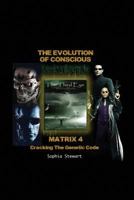
  • Matrix 4 The Evolution: Cracking the Genetic Code pushes into explicitly scientific territory. “Cracking” implies encryption, locked rooms, a code that can be broken with the right method. The title promises a hybrid of speculative argument and science-inflected metaphor, with genetics as both subject and symbol: what’s inherited, what’s engineered, what’s written into us.

  • The Mother of The Matrix-The Sophia Stewart Story reads as the most personal of the three, placing Stewart herself in the foreground. The doubled emphasis suggests a narrative of identity and ownership, told with the same declarative force that runs through her other work. For readers interested in how an author frames their own role inside a larger cultural argument, this is the place to start.

How these books move

Stewart’s approach is less about scene than structure: naming, linking, insisting. The titles favor charged nouns that come preloaded with debate, and the books read like a guided tour through a worldview, where each term opens onto another set of claims. The questions reach for the foundational: what reality is made of, how it’s perceived, who authored the blueprint. Read Sophia Stewart when you want writing that treats reality as something to interrogate, that keeps the questions alive and makes questioning the main event.

If you’re looking to buy Sophia Stewart books, you can find great low-cost copies on ThriftBooks.

Copyright © 2026 Thriftbooks.com Terms of Use | Privacy Policy | Do Not Sell/Share My Personal Information | Cookie Policy | Cookie Preferences | Accessibility Statement
ThriftBooks ® and the ThriftBooks ® logo are registered trademarks of Thrift Books Global, LLC
GoDaddy Verified and Secured