


Most Popular Books
Rachel Hochhauser
Follow to get improved recommendations.
Author Bio
A familiar villain, brought close enough to touch
Some stories arrive pre-lit by the glow of what you already know. A name, a silhouette, a role assigned long before the first page. Rachel Hochhauser steps into that charged space and asks what happens when a figure treated as shorthand is given room to breathe, not as an excuse, not as a wink, but as a full-length portrait with consequences.
In Rachel Hochhauser books, the interest often sits in the pressure points: public story versus private motive, the way a reputation hardens, the cost of being seen only one way. The titles signal a taste for the charged corner of the fairy-tale tradition, the part where manners and power meet, where a household can become a courtroom, where love and inheritance and resentment share the same table.
Power, performance, and the price of a name
To write toward a character already stamped "villain" is to write into resistance. The reader comes armed with assumptions. The trick is not to erase them, but to use them, to let expectation become tension. There’s a particular pleasure in this kind of novel: the slow recalibration of judgment. Not a sudden reversal, but a series of small, accumulating adjustments. A scene that lands differently once you notice who holds the money. The best retellings don’t simply swap labels; they show how labels get made.
Hochhauser’s approach leans toward the domestic as a site of politics. "Lady" is a word with rules built into it: rank, decorum, surveillance. It implies rooms where people are watched, measured, corrected. It also implies a kind of armor: the practiced smile, the controlled voice, the ability to turn a slight into a strategy. That’s rich ground for a novel about how a woman is taught to become legible to others, and what she has to bury to do it.
Spotlight: Lady Tremaine and the art of the retold life
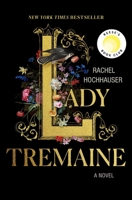
Lady Tremaine announces its intention in two words. It doesn’t offer a nickname or soften the edges. It gives you a title, formal and weighty, and asks you to look again. "Tremaine" carries the echo of a story many readers know, but "Lady" insists on context: class, expectation, the social machinery that can turn a person into a role. The reading experience lives in the friction between the person and the part. A reputation can be a sentence. A marriage can be a merger. A household can be a battleground conducted in whispers.
Lady Tremaine: Reese’s Book Club Pick (A Novel) signals the same core work with an added marker of cultural conversation, the kind of book passed from reader to reader with underlined passages and arguments attached. These are novels that invite discussion because they deal in interpretation: who deserves sympathy, what counts as harm, whether a story can ever be "true" when it’s been told the same way for generations.
For readers who like their fairy tales sharpened
Expect a novel that pays attention to surfaces, clothing, manners, titles, the choreography of social life, and treats them as more than decoration. Surface here is a language: weapon, shield, sometimes a trap. There’s also an interest in women’s anger as a response with a history. A novel centered on Lady Tremaine has room to ask what, exactly, she was given, what she had to trade away, and what it costs to be remembered only for the worst version of yourself. Step through expecting complication, not comfort.
If you’re looking to buy Rachel Hochhauser books, you can find great low-cost copies on ThriftBooks.
Copyright © 2026 Thriftbooks.com
Terms of Use | Privacy Policy | Do Not Sell/Share My Personal Information | Cookie Notice | Cookie Preferences | Accessibility Statement
ThriftBooks ® and the ThriftBooks ® logo are registered trademarks of Thrift Books Global, LLC
ThriftBooks ® and the ThriftBooks ® logo are registered trademarks of Thrift Books Global, LLC
