THE HIDDEN ALARM
Out of Stock

The Business Value of Virtual Service-Oriented Grids (Strategic Insights for Enterprise Decision Makers) (IT Best Practices Series)
Out of Stock

Adaptive Design Methods in Clinical Trials
$68.99 - $233.99

Principles of Scientific Methods
Out of Stock

Paradoxes in Scientific Inference
$65.99

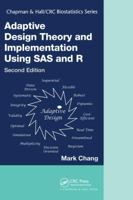
Adaptive Design Theory and Implementation Using SAS and R
$94.99 - $249.99

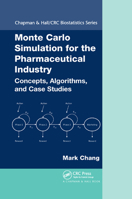
Monte Carlo Simulation for the Pharmaceutical Industry: Concepts, Algorithms, and Case Studies (Chapman & Hall/CRC Biostatistics Series)
$94.99 - $233.99

Modern Issues and Methods in Biostatistics

$59.99 - $60.10

Introductory Adaptive Trial Designs: A Practical Guide with R
$86.69 - $110.99

Adaptive Design Theory and Implementation Using SAS and R (Chapman & Hall/Crc Biostatistics)
$73.89

Innovative Strategies, Statistical Solutions and Simulations for Modern Clinical Trials (Chapman & Hall/CRC Biostatistics Series)
$147.29 - $189.99

Artificial Intelligence for Drug Development, Precision Medicine, and Healthcare
$103.99 - $189.99

Classical and Adaptive Clinical Trial Designs Using ExpDesign Studio
$157.80

AI for Drug Development and Well-being
Out of Stock

Innovative Strategies, Statistical Solutions and Simulations for Modern Clinical Trials
$72.99

AI for Medical Science and Well-Being
$8.99

Foundation, Architecture, and Prototyping of Humanized AI: A New Constructivist Approach
$166.99

Foundation, Architecture and Prototyping of Humanized AI: A New Constructivist Approach
$66.99

Critical Thinking and Creative Analogies in Statistics, Science, and Technology: Essential Skills for the AI Era
$233.99

Critical Thinking and Creative Analogies in Statistics, Science, and Technology: Essential Skills for the AI Era
$88.99
Mark Chang writes for readers who don’t want a pep talk about “data-driven decisions.” They want the machinery: how a trial changes course without breaking its own logic, how an inference can look airtight and still be wrong, how software shapes what a method becomes in practice. Across his books, the through-line is a working respect for uncertainty, not as a fog to complain about, but as constraints you can model, test, and live with. These technical books are also about judgment: adaptive designs ask you to decide what can be learned early and what rules keep a study honest.
Adaptive design is often summarized as “flexibility,” but the interesting part is the price. You don’t revise a study midstream for free. You pay in careful control of error rates, in pre-specified decision rules, in simulation work that makes operating characteristics visible before enrollment begins. Implementation matters as much as theory: when a method becomes code, every vague phrase resolves into a step, a stopping rule, a scheme, and that translation is where many “understood” ideas reveal their gaps. Statistics has a reputation for certainty, yet two analysts can make different choices and both sound responsible. Adaptation multiplies decision points, and decision points multiply opportunities for misinterpretation.
Biostatistics is never just “applied statistics.” The applications are alive: endpoints evolve, standards shift, and the ethical stakes are immediate. Chang’s work rewards a pencil-in-hand posture. These aren’t books you skim for inspiration; they’re books you return to when a protocol is being drafted, when an interim analysis looms, or when a result feels too neat to trust. Readers searching for “The Hidden Alarm by Mark Chang” should note that the books associated with Mark Chang here center on biostatistics, scientific inference, and adaptive clinical trial design.
If you’re looking to buy Mark Chang books, you can find good low-cost copies on ThriftBooks.