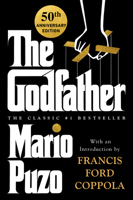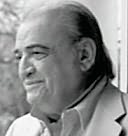
Lifelong New Yorker Mario Puzo drew upon figures in his Italian-American family to create the characters in his smash hit The Godfather in 1969; but he claimed never to have met a real-life mobster, and his detailed portrait of the Mafia world came entirely from diligent research.

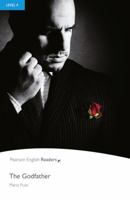
The Godfather
$7.09 - $221.89

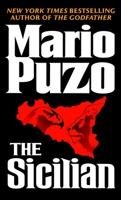
The Sicilian
$5.29 - $26.99

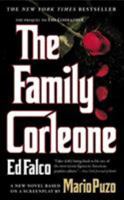
The Family Corleone
$5.59 - $41.89

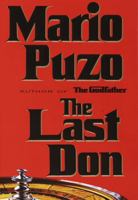
The Last Don
$4.39 - $10.49

Omertà
$4.69 - $15.19

The Family
$4.19 - $18.69

The Fortunate Pilgrim
$4.69 - $22.39

Fools Die
$5.29 - $15.89

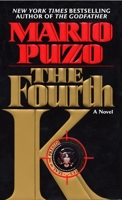
The Fourth K
$4.99 - $24.29

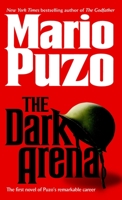
The Dark Arena
$5.69 - $19.19

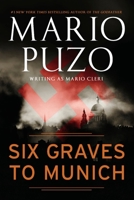
Six Graves to Munich
$4.49 - $28.70

Inside Las Vegas
$6.69 - $9.29

The Godfather Papers and Other Confessions
$53.39 - $57.79

The Godfather Papers
Out of Stock

The Runaway Summer of Davie Shaw (Puffin Books)
Out of Stock

The Godfather / The Last Don
Out of Stock

The Godfather: Level 4 (Penguin Readers (Graded Readers)) by Puzo, Mario (2008) Paperback
Out of Stock

Weasels Ripped My Flesh!: Two-Fisted Stories From Men's Adventure Magazines of the 1950s, '60s & '70s
Out of Stock

Inside Las Vegas / Mario Puzo ; color photography by John Launois ; black-and-white photography by Michael Abramson and Susan Fowler-Gallagher
Out of Stock

Mario Puzo Godfather Hardcover Novel Collection 5 Book Set

Out of Stock

Penguin Readers Level 7: The Godfather (ELT Graded Reader)
Out of Stock

The Godfather
Out of Stock

The Fourth K By Mario Puzo; The Middle Kingdom By Andrea Barrett; Prussian Blue By Tom Hyman & The Wingless Bird By Catherine Cookson.
Out of Stock

Rare Fools Die by Puzo, Mario ~ 1978 ~ Hardback
Out of Stock

Inside Las Vegas, inscribed by the American author.
Out of Stock

The Cotton Club (St Martin's Original Screenplay Series)
Out of Stock

Selected from the Godfather (Writers Voices)
Out of Stock

The Godfather / Fortunate Pilgrim
Out of Stock

The Sicilian/Omerta
Out of Stock

Best of Classics: The Call of the Wild/The Godfather/The Time Machine
Out of Stock
Mario Puzo was a lifelong New Yorker, and he carried that street-level sense of proximity into his fiction: the feeling that power isn’t abstract, it’s personal. When he wrote The Godfather (1969), he drew on figures in his Italian-American family to shape character: the way people talk around a kitchen table, the codes they keep, the grudges they don’t forget. The Mafia world, though, wasn’t firsthand. Puzo said he never met a real-life mobster. What reads like inside knowledge came from diligent research, a writer building a convincing system from the outside, brick by brick.
In the best-known Puzo novels, the engine is rarely mystery. The reader isn’t asked to solve a puzzle so much as to watch a structure hold. Puzo is interested in hierarchy: who owes whom, who can ask for what, and what it costs to say yes. He writes scenes that feel like negotiations even when no one uses the language of business. A favor can be a contract. A compliment can be a warning. The deeper pressure comes from anticipation, the sense that every gesture has a ledger attached to it, where love becomes leverage and protection starts to look like control.
Puzo’s sentences move with a practical clarity. He doesn’t need ornamental language to make a scene feel charged; he relies on the weight of what’s being exchanged. A conversation can read like a transaction. A family gathering can carry the suspense of a summit. The prose doesn’t flinch from everyday details that make a criminal world feel plausible, not glamorous, not mythic, but lived-in. That steadiness also lets Puzo shift scale quickly, moving from the private to the institutional in a few paragraphs while the reader feels the continuity: the same human impulses, just amplified by money and fear.
Many crime novels offer speed. Puzo offers a system, then shows what it does to the people inside it. The appeal isn’t only the aura of the Mafia; it’s the recognizable human pattern beneath it. People want safety. People want status. People want to believe their choices are moral when they’re mostly strategic. Puzo writes that friction without speeches, letting scenes do the work.
If you’re looking to buy Mario Puzo books, you can find great low-cost copies on ThriftBooks.