


Similar Authors To Leon Uris
Leon Uris
Follow to get improved recommendations.
Books by Leon Uris

Trinity
$4.39 - $38.29

Exodus
$5.49 - $41.49
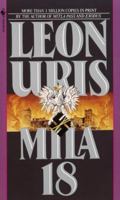
Mila 18
$5.29 - $32.89

The Haj
$4.49 - $55.99
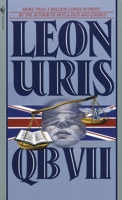
QB VII
$5.79 - $14.79
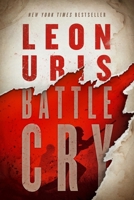
Battle Cry
$5.59 - $64.59

Redemption
$5.89 - $9.99

Armageddon: a novel of Berlin
$7.29 - $56.89
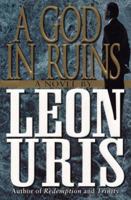
A God in Ruins
$5.49 - $12.12

Topaz
$5.79 - $29.03

Ireland: A Terrible Beauty
$5.89 - $16.22

The Angry Hills
$6.19 - $39.19

O'Hara's Choice
$4.19 - $8.49

Mitla Pass
$5.19 - $28.76

Exodus, Mila 18, QB VII (Complete and Unabridged)
$11.79

Jerusalem, Song of Songs
$16.22

Three Great Novels of World War II
$11.89 - $14.29

Ireland Revisited
$5.29 - $8.69

Exodus Revisited by Leon Uris (1971-05-03)
$11.99 - $26.46

Leon Uris ARMAGEDDON 1st Edition Doubleday and Company 1964
Out of Stock

Strike Zion!
Out of Stock

නික්ම යාම හෙවත් EXODUS - 1
Out of Stock

Leon Uris (3) QB VII ~The Haj ~ Trinity
Out of Stock

O'hara's Choice & A God in Ruins & Angry Hills & QB VII & Armageddon & Topaz & Trinity & Redemption
Out of Stock

Trinité - tome 2 - Shelley
Out of Stock
![In the Steps of Exodus. With photographs by Dimitrios Harissiadis [Hardcover] Leon Marcus Uris and Dimitrios Harissiadis B0018FWOIC Book Cover](https://m.media-amazon.com/images/I/41ULozOPgzL._SL200_.jpg)
In the Steps of Exodus. With photographs by Dimitrios Harissiadis [Hardcover] Leon Marcus Uris and Dimitrios Harissiadis
Out of Stock

Milta Pass, Exodus & Mila 18 by Leon Uris (3 Books)
Out of Stock

SCARCE, ASIAN PIRATE EDITION, LEON URIS, THE ANGRY HILLS, WW2 HISTORICAL FICTION
Out of Stock

Leon Uris 7 Book Set
Out of Stock

Lot of 2 Leon Uris Hardback Books.
Out of Stock
Author Bio
Big history, close pressure
Leon Uris writes novels that move with a crowd behind them. The titles point to scale: nations in upheaval, wars that redraw maps, communities forced to decide what to carry forward and what to leave behind. These are books built for momentum: long arcs, high stakes, scenes made for long sittings. If you come for intimacy, it’s the intimacy of people pressed together by events. Private life doesn’t float above public life here; it gets dragged through it.
Belonging, borders, and the cost of choosing sides
Across an uris novels list, certain preoccupations recur. Identity isn’t a quiet interior matter; it’s argued over, legislated, threatened. Home is not just a house but a claim, and claims have consequences. Uris writes at the seam where personal loyalties meet public demands. Even when the prose is straightforward, the temperature runs hot. He pushes toward decisions, toward the moment when someone has to act and live with it.
Popular Leon Uris books to start with
Exodus is the title many reach for first, and it signals Uris’s method: take a sweeping historical subject and render it through narrative drive. The word carries both motion and loss. Expect a novel that treats displacement as a lived condition, with politics and personal stakes braided tightly together.
Mila 18 sounds like an address, a fixed point on a map, the sort of place history turns into a symbol. That specificity gives a different pressure: a bounded space that can be surrounded, defended, remembered. Uris uses that anchoring to make large events feel immediate.
Trinity announces its subject with blunt clarity, Ireland, then complicates it with a word suggesting threefold tensions: faith and politics, family and faction, past and future. Uris writes historical novels like arguments. This is a book for readers who want the feel of long memory: grievances, loyalties, and the way old stories keep shaping new violence.
The Haj implies pilgrimage, ritual, and the weight of tradition, which becomes a way to explore belonging: who is inside a community, who is outside it, and what happens when the boundary hardens. The title also hints at travel and transformation, movement through a landscape that is also movement through competing histories.
Battle Cry is the most direct of these titles: it promises conflict, cohesion, and the language people use to make fear feel like purpose. Uris favors forward motion, scenes that build toward action, then consequences that follow fast. A strong starting point if you like military fiction attentive to both the group and the individual under strain.
The reading experience: fast pages, hard questions
Uris’s historical fiction works like a bridge between the newspaper headline and the private room. You feel the machinery of public life, but the story keeps returning to what those forces do to ordinary routines: how people eat, love, argue, raise children. At its best, the suspense isn’t “who did it,” but “what will it cost to keep going.” Uris is interested in conviction, the way belief can steady a person and the way it can narrow them. His signature is the insistence that history is personal, and the personal becomes political whether anyone wants it or not.
If you’re looking to buy Leon Uris books, you can find great low-cost copies on ThriftBooks.
Copyright © 2026 Thriftbooks.com
Terms of Use | Privacy Policy | Do Not Sell/Share My Personal Information | Cookie Policy | Cookie Preferences | Accessibility Statement
ThriftBooks ® and the ThriftBooks ® logo are registered trademarks of Thrift Books Global, LLC
ThriftBooks ® and the ThriftBooks ® logo are registered trademarks of Thrift Books Global, LLC
