


Most Popular Books
Similar Authors To Lee Kuan Yew

From Third World to First : The Singapore Story: 1965-2000
$28.39 - $68.09
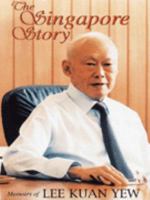
The Singapore Story: Memoirs of Lee Kuan Yew
$47.89 - $57.49
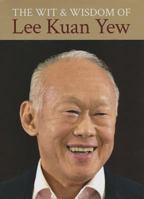
The Wit and Wisdom of Lee Kuan Yew
$13.09 - $16.35

One Man's View of the World
$132.19 - $157.49

My Lifelong Challenge: Singapore's Bilingual Journey
$83.79

The Battle for Merger
Out of Stock

Lee Kuan Yew: A Life In Pictures
Out of Stock
Multiple Crack Problems in Elasticity (Advances in Damage Mechanics)
$275.69

Lee Kuan Yew on China and Hongkong after Tiananmen (Lianhe Zaobao series)
Out of Stock

Lee Kuan Yew in His Own Words
Out of Stock
Asia
Out of Stock
Lee Kuan Yew’s books read like a record kept close to the desk: decisions weighed, trade-offs admitted, outcomes tracked over years rather than news cycles. The writing keeps returning to the same questions. What can a government actually do? What does it cost? What happens if it fails? Across his memoirs and later reflections, the through-line is governance as lived work, a sequence of choices made under pressure. The titles signal the arc: a Singapore story in two large movements, then shorter, sharper volumes that gather judgments into something like a working notebook.
At full length, the memoirs are where the scaffolding shows. The Singapore Story: Memoirs of Lee Kuan Yew announces its intention plainly: a first-person account, shaped around a national narrative, told by someone who expects the reader to care about cause and effect alike. Story here doesn’t mean ornament; it means sequence, what came first, what followed, what had to be improvised. The companion volume, From Third World to First: The Singapore Story: 1965 to 2000, narrows the frame to a defined span and stakes its claim in the title’s blunt contrast, which is not subtle, and that’s the point. It sets up a reading built around outcomes: the measurement of change, the insistence on comparison, the argument that transformation can be explained. Read together, the two books suggest a memoir project interested less in private reverie than in the mechanics of statecraft, where the drama is in constraints, timing, and resources.
After the long memoir form, the shorter titles move like briefings. One Man’s View of the World signals a shift from narrative to vantage point, a single voice scanning across countries and leaders. The one man in the title is both a limitation and a promise: not a committee document, but a personal map of what matters. The Wit and Wisdom of Lee Kuan Yew goes further, a kind of portable rhetoric with arguments reduced to their sharpest edges. The experience is different: less immersion, more sampling.
With Asia, the title itself carries tension. “Rising or falling” reads like a fork in the road, a refusal to treat growth as destiny. Rather than a victory lap, it is a diagnostic: what conditions support ascent, what failures drag it down, and how quickly the balance can shift. Regions don’t move as one, and momentum can reverse.
A practical way through Lee Kuan Yew books in order is to start with the memoir frame, The Singapore Story and then From Third World to First, and only afterward move to the shorter, more panoramic books. The memoirs give you the sense of sequence: problems arriving, responses taking shape, consequences unfolding. The later books read like commentary from someone who has already lived through the constraints he’s describing. These are books for readers who like to watch a mind work in public, built for those who want to think about how countries change and what leaders can and cannot control. If you’re looking to buy Lee Kuan Yew books, you can find great low-cost copies on ThriftBooks.
