


Kenya Suzuki
Books by Kenya Suzuki


Author Bio
Questions as a social language
Kenya Suzuki’s manga turns a familiar high-school setup into something closer to a running conversation: quick questions, quick answers, and the small hesitations between them. The title alone, Please Tell Me!, frames the series as an exchange rather than a quest. It’s about what people risk when they ask, what they reveal when they answer, and how a group dynamic can change shape in a single beat. Read a few pages and you can feel the engine: curiosity with consequences. The comedy comes from timing and bluntness; the tenderness comes from how seriously the characters take one another, even when they’re teasing.
Light touch, sharp edges
In a lot of school comedies, the classroom is just a stage. Here, it’s more like a testing ground for social rules. Suzuki’s central move is to treat awkward as a real condition with its own physics: a question lands, everyone recalculates, and the room’s temperature changes. The series suggests that embarrassment isn’t only personal; it’s shared, contagious, sometimes even useful. Because the premise is conversational, the reading experience is brisk. Scenes can pivot on a single misunderstanding, a too-honest answer, or the way a friend tries to rescue someone without making it worse. There’s also a quiet insistence in the setup. “Tell me” can be a demand, but it can also be an invitation, and across the series Suzuki returns to the idea that asking is its own form of trust.
Where to start with the Galko-chan volumes
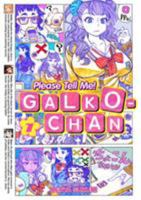
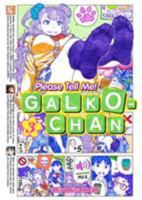
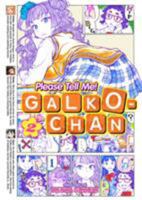
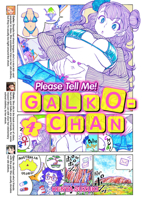
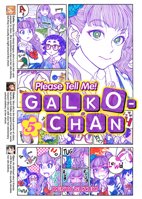
The Please Tell Me! Galko-chan books are built to be read in order, but each volume delivers its own set of social puzzles. If you’re new to Kenya Suzuki, starting at the beginning lets you settle into the rhythm. Volume 1 introduces the series’ core pleasure: watching a group negotiate curiosity in real time, the tone buoyant but the social stakes clear, since a careless question can stick to someone for days. Volume 2 deepens the pattern, letting the jokes land with more precision once you know how the conversations twist. Volume 3 is where the format shows its range, the same setup producing very different moods depending on who’s asking and who’s cornered into answering. Volume 4 keeps making the smallest social moments feel specific, since a question can be a joke, a challenge, or a lifeline. By Volume 5, the pleasure is partly familiarity and partly surprise, because Suzuki can still find a new angle inside the same everyday setting. If you want to browse the series as a whole, Please Tell Me! Galko-chan gathers the volumes under one umbrella.
The reading experience: quick chapters, lingering aftertaste
These volumes are easy to pick up in short bursts, favoring compact scenes and immediate setups, the kind that make “just one more” feel reasonable. But the best moments don’t vanish when the page turns. They linger because they’re built from recognizable social material: the fear of being misunderstood, the relief of being taken seriously, the strange intimacy of laughing at the same thing at the same time. Readers who like dialogue-driven manga tend to find a lot to chew on here. If you’re looking to buy Kenya Suzuki books, you can find good low-cost copies on ThriftBooks.
ThriftBooks ® and the ThriftBooks ® logo are registered trademarks of Thrift Books Global, LLC
