


Most Popular Books
Jim Curtis
Follow to get improved recommendations.
Books by Jim Curtis

The Book of Possibility: Release. Align. Become.
Releases 9/1/2026

Imagine Dragons The Best: Piano Sheet Music Book
Out of Stock
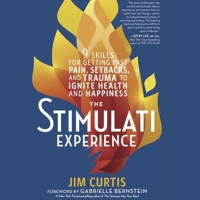
The Stimulati Experience: 9 Skills for Getting Past Pain, Setbacks, and Trauma to Ignite Health and Happiness
$131.89 - $158.29

Principles of Sociology: Canadian Perspectives
$5.79 - $56.49

Rock Eras: Interpretations of Music and Society, 1954-1984
$13.19

Piano Music Greatest Pop & Movie Hits: Piano Sheet Music - Big Note Piano
Out of Stock

Greatest Pop Hits Piano Book Sheet 2018: Big Note Piano
Out of Stock

Skyway
$12.24

The Coherence of the Russian Classics: Essays on the Dynamics of Creativity
$58.12

Inspiring Change: How to Influence Behaviour for a Better World
$34.99

Chekhov, The Anxious Playwright: His Four Great Plays in Their Cultural Context (Routledge Advances in Theatre & Performance Studies)
$200.00

Book of Possibility
Releases 9/22/2026
Author Bio
Two lanes: resilience, and the structure of music and the classroom
Jim Curtis’s titles move in a few distinct directions, and that variety is part of the appeal. Some of his work reads like a set of tools for a hard week: practical, steady, built around the idea that pain and disruption can be met with skills rather than slogans. Other books lean into structure of a different kind, the ordered thinking of sociology or the discipline of piano practice. Taken together, Jim Curtis books suggest an author interested in how people change, and in the habits that make change less mysterious.
Resilience as a set of skills, not a mood
The self-help titles put verbs up front: releasing, aligning, becoming, getting past pain. That language points toward steps and repeatable practices, the kind of pages you dog-ear and return to after a setback. In The Stimulati Experience: 9 Skills for Getting Past Pain, Setbacks, and Trauma to Ignite Health and Happiness, the promise is explicit: nine skills, not nine inspirations. The title doesn’t pretend difficulty is rare; it frames recovery as something you can learn in pieces, then practice. The Book of Possibility: Release. Align. Become. shifts the emphasis from endurance to openness. The three clipped imperatives read like stages: the letting go, the reorientation, the new shape of a life. It invites a reader to take stock, simplify, and try again with a cleaner internal map.
Structure in the classroom and at the keyboard
Principles of Sociology: Canadian Perspectives signals a different mode: systematic, explanatory, designed to be taught and tested. Principles implies foundations, the basic concepts a student needs before moving into arguments and case studies, with a regional lens on how a society’s institutions shape the questions sociology asks. Then there’s the musician’s version of structure. Imagine Dragons The Best: Piano Sheet Music Book translates songs into something you can put under your fingers. Sheet music is its own instruction; the page doesn’t motivate you, it simply waits. The work happens in small increments: a left-hand pattern that finally settles, a chord change that stops snagging, a tempo that steadies.
A turn toward story
Among these framework-driven books, Skyway stands out on title alone. One word, wide horizon. A skyway can be a bridge, a passage overhead, a route that changes how you move through a place. Placed next to books that promise guidance, it reads like a change of pace, a reminder that not every kind of learning arrives as a numbered list.
Reading by need
People often ask for Jim Curtis books in order, but these titles don’t insist on a single path. They’re better approached like tools on a shelf. For real-life strain, start with The Stimulati Experience, then The Book of Possibility for a reset. For study, Principles of Sociology offers a course-ready spine of concepts. For practice in the literal sense, the Imagine Dragons sheet music gives a reason to sit down, and Skyway is the outlier worth sampling. What links the range is an interest in structure, and the sense that change can be approached deliberately. If you’re looking to buy Jim Curtis books, you can find great low-cost copies on ThriftBooks.
Copyright © 2026 Thriftbooks.com
Terms of Use | Privacy Policy | Do Not Sell/Share My Personal Information | Cookie Policy | Cookie Preferences | Accessibility Statement
ThriftBooks ® and the ThriftBooks ® logo are registered trademarks of Thrift Books Global, LLC
ThriftBooks ® and the ThriftBooks ® logo are registered trademarks of Thrift Books Global, LLC
