


Ibukun Awosika




Author Bio
Boardrooms, beginnings, and the language of practical ambition
Ibukun Awosika’s titles read like a set of doors: one opens onto the meeting room, another onto the early scramble of starting out, another onto the private work of keeping your head straight. The through-line is business as a lived daily practice, decisions made with imperfect information and the steady translation of ideas into action. These are not abstract treatises. They prefer the workable question: What do you do when you’re the only woman in the room, or the one signing the checks and taking the blame?
The room where decisions get made
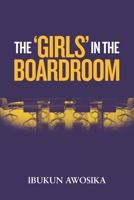
The most vivid setting is implied rather than described: the boardroom, a space defined by who speaks first and who gets interrupted. The 'Girls' in the Boardroom signals a clear interest in how women navigate authority in environments that still treat them as exceptions. The quotation marks around Girls do a lot of work, hinting at the way language can shrink a professional woman down to something smaller than her role, and how that smallness has to be confronted, corrected, or simply outlasted.
Entrepreneurship as a series, not a slogan
If the boardroom is one destination, entrepreneurship is the road there, and Awosika’s Girl titles read like a continuing conversation. The "Girl" Entrepreneurs and The 'Girl' Entrepreneurs 3 suggest an ongoing project: returning to how women build companies, sustain them, and grow into leadership that can survive success. The repetition matters. Entrepreneurship is rarely a single leap; it’s a long sequence of choices that look small from the outside, like pricing, hiring, and saying no to the wrong client. There’s also a deliberate tension in the word Girl, which can patronize and soften authority, so the quotation marks hint at reclamation and critique at once.
What “his way” implies
Business His Way carries a different charge: a clear-eyed look at the default settings of commerce, the assumptions treated as neutral even when they’re gendered. His way can mean the inherited rules of the game: how leadership is supposed to sound, what confidence looks like, what ambition is allowed to cost. It also implies a reader who has felt the pressure to translate themselves and perform certainty. A book with this title invites argument, asking the reader to notice where they’ve been coached into smaller choices.
Short forms: quotes as tools you can carry
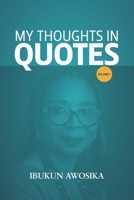
Some days you need a sentence you can keep in your pocket, a line that steadies you before a meeting. My Thoughts in Quotes suggests a shift into compressed form: distilled observations meant to be revisited and used. Quote collections function like a personal toolkit, something to keep near the desk rather than on a shelf.
What these books offer the working reader
Awosika’s titles suggest books meant to be used, for readers building something, a company, a career, a reputation for competence that doesn’t require self-erasure, and tired of advice that pretends the playing field is level. The boardroom doesn’t erase gender; it amplifies it. If you’re drawn to books by Ibukun Awosika, the experience feels like a mix of counsel and confrontation: permission to want more, and a clear look at what wanting more will demand. If you’re looking to buy Ibukun Awosika books, you can find great low-cost copies on ThriftBooks.
ThriftBooks ® and the ThriftBooks ® logo are registered trademarks of Thrift Books Global, LLC
