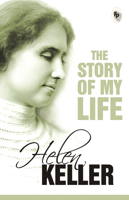
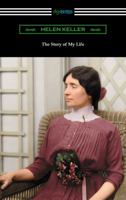
The Story of My Life
$4.19 - $100.00

The Touch of Magic + the Story of My Life
$7.29 - $8.29

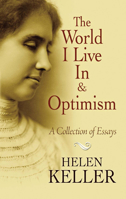
The World I Live in and Optimism: A Collection of Essays
$6.79 - $11.03

Light in My Darkness
$7.29 - $13.27

The World I Live In
$6.29 - $32.95

My Religion
$7.99 - $42.95

Optimism (1903)
$9.59 - $34.95

To Love This Life: Quotations From Helen Keller

$5.89 - $8.29

Women's Wit and Wisdom: A Book of Quotations (Dover Thrift Editions)
$4.79

The Story of My Life with Her Letters (1887-1901) and a Supplementary Account of Her Education, Including Passages From the Reports and Letters of Her Teacher, Anne Mansfield Sullivan
$5.89 - $36.95

Rebel Lives: Helen Keller

$8.49 - $9.69

Teacher: Anne Sullivan Macy
$83.19 - $114.84

Out of the Dark: Essays, Letters and Addresses on Physical and Social Vision
$14.64 - $45.68

How I Would Help the World
$9.69 - $11.09

Reader's Digest Great Biographies, Vol. 9: Mahatma Gandhi / The Story of My Life / American Caesar: Douglas MacArthur, 1880-1964 / Walden / Madame Curie
$9.99

The Faith of Helen Keller
$6.19

Helen Keller: Autobiographies & Other Writings (LOA #378): The Story of My Life / The World I Live In / Essays, Speeches, and Letters
$29.41

The Open Door
$9.29

To Live, To Think, To Hope: Inspirational Quotes of Helen Keller
$13.95

My Key of Life, Optimism: An Essay
$18.24 - $57.63

Words Of Wisdom: 100 Selected Quotes by Helen Keller with Beautiful Illustrations

$17.37 - $28.99

The Story of My Life VOL 2: Super Large Print Edition of the Classic Autobiography Specially Designed for Low Vision Readers with a Giant Easy to Read Font
$13.09

Minu elu lugu
Out of Stock

The Door Opens and Our Mark Twain
$17.95 - $32.95

The Song Of The Stone Wall
$9.72 - $32.95

Three Days to See
Out of Stock

Selected Writings
$60.00

Un Human Rights Treaty Bodies: Law and Legitimacy
$58.00 - $172.70

Helen Keller in Scotland: A Personal Record (Classic Reprint)
$22.95 - $33.95

Helen Keller's Journal
$34.69
Helen Keller’s writing returns, again and again, to a stubbornly concrete question: what does it mean to know something? Not as an idea, but as lived experience, the feel of a room, the pressure of a hand. Her books don’t ask for pity or awe. They ask for attention, becoming studies in perception: how the world arrives through touch, vibration, scent, memory, and the disciplined work of naming. Her insistence is that consciousness is not a vague fog; it’s built, piece by piece, from sensation and language. That makes her books oddly practical. The most direct entry point is her life writing, but the deeper pattern is this conviction that knowing is something assembled, not simply received. They don’t float. They land.
The Story of My Life is the book many readers mean when they ask, “What book did Helen Keller write?” It’s a memoir, but also a record of how a mind learns to move through the world. The power often sits in small units: moments of recognition, the way a single word can reorganize a day. Because it’s written from inside the process, the book invites a particular kind of reading: you start to notice how often people glide past the question of how they know what they know. Some editions pair it with other work; The Touch of Magic + the Story of My Life makes that explicit. “Touch” isn’t a metaphor here; it’s a method, and the reading is less about miracles than about translation.
The World I Live in and Optimism: A Collection of Essays signals two concerns. One is descriptive: what the world feels like from the inside, assembled from nonvisual cues. The other is philosophical: what it takes to keep going, and what “optimism” means as a practice. The World I Live In also appears as a standalone, and the title suggests the wager: that “world” is not a neutral given but something each person inhabits and revises. For readers interested in disability studies or the craft of describing perception, this is where her work feels most quietly radical, because it insists on precision.
Light in My Darkness turns toward spiritual language, the kind people reach for when ordinary description runs out. The contrast of light and darkness could be simple symbolism, but the best spiritual writing tests what belief can do in a lived day. Readers expecting a straight line from difficulty to uplift find a mind willing to sit with paradox: illumination that doesn’t erase darkness, hope that doesn’t deny pain.
Keller’s prose works by steady accumulation: she returns to a subject, turns it slightly, and returns again, so you don’t just understand an idea, you feel its edges. The throughline is craft, the careful choice of what to describe. She writes as if clarity is an ethical act, asking the reader to slow down and let “world” mean more than scenery.
If you’re looking to buy Helen Keller books, you can find good low-cost copies on ThriftBooks.