


Gary Brucato
Books by Gary Brucato

Author Bio
Where clinical language meets the hard edge of violence
Gary Brucato writes in a register where words have consequences. His titles point to two concerns: how severe mental illness unfolds over time, and how modern violence takes shape in the world around it. The result asks the reader to resist the easy story, the single cause, the neat label, and look instead at patterns, stages, and the slow build of risk. The focus is less on sensational cases than on frameworks: how clinicians might think, how systems might respond, how a phenomenon changes through history. If you come looking for careful categories and the discipline of naming what’s happening, you’re in the right place.
Violence as a modern problem
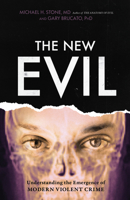
The New Evil: Understanding the Emergence of Modern Violent Crime signals its ambition in the subtitle, where “Emergence” is the key word. The premise suggests certain forms of violent crime are not repeats of old patterns but developments with their own conditions: social, technological, cultural, psychological. Brucato’s approach is diagnostic: not “what happened?” but “what is this thing we’re seeing, and why does it look like this now?” The phrase implies a shift in scale and texture, inviting questions about copycat dynamics, media ecosystems, grievance as identity, and violence as performance, an experience closer to analysis than narrative.
Schizophrenia, mapped across time
Where The New Evil looks outward, The Three Stages of Schizophrenia: Clinical Care Throughout the Natural History of the Illness turns toward the clinic and the long view. The title is plainspoken and structural. It treats schizophrenia not as a single static condition but as an illness with a “natural history,” a course that matters for care. “Three stages” promises organization: distinct phases, distinct needs, and clinical decisions that change with the illness. Because the subtitle foregrounds “clinical care,” the center of gravity is practical: matching interventions to early signals, acute periods, and longer-term management. Another edition of the same title is also available: The Three Stages of Schizophrenia: Clinical Care Throughout the Natural History of the Illness.
How these books tend to move
Across these titles, the work leans toward classification, not as a cold exercise, but as a way to reduce confusion. “Understanding” and “clinical care” suggest books built from definitions and the careful separation of similar problems. Yet the subject matter keeps the stakes close. Violent crime and schizophrenia are not abstract topics. They touch emergency rooms, courtrooms, family kitchens, and the private calculus of fear and responsibility.
What kind of reader comes to Dr. Gary Brucato?
These are books for readers who want to think in sequences: what leads to what, what can be noticed early, what becomes harder to shift later. The titles don’t promise a panoramic survey; they promise a particular way of seeing. If you work in mental health, you’ll recognize the emphasis on course and care: a diagnosis is not a single moment but a long set of decisions. For the criminology angle, the interest is in emergence. Either way, the impulse is the same: name the phenomenon accurately, then follow it through time.
If you’re looking to buy Gary Brucato books, you can find great low-cost copies on ThriftBooks.
ThriftBooks ® and the ThriftBooks ® logo are registered trademarks of Thrift Books Global, LLC
