


Most Popular Books
Emma Brodie
Follow to get improved recommendations.

Author Bio
Love stories with a wide sky overhead
Emma Brodie’s fiction leans into the pull of romance while keeping an eye on the larger weather around it: ambition, art, memory, the way a single choice can tilt a life. Even her titles carry a sense of scale. One points up at constellations; another looks out toward open water. They suggest books that want both intimacy and distance, the close-up of feeling and the long view that makes it feel earned.
Popular Emma Brodie books
Songs in Ursa Major
Songs in Ursa Major opens a door onto a world where music isn’t background; it’s the engine. The title does a lot of work: “songs” for craft and performance, “Ursa Major” for myth, navigation, and the strange comfort of patterns you can recognize in the dark. Brodie’s approach is to treat art as something lived in public and processed in private. This is the kind of novel that invites you to listen as you read, where a chorus can become shorthand for a whole relationship. The stakes tend to be double: what it costs to make something, and what it costs to be close to someone who is making something. It’s romance, but also the romance of a life built around sound, timing, and the hunger to be understood.
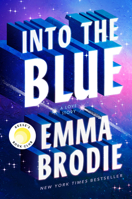
Into the Blue
Into the Blue announces its direction in three words: forward, outward, and a little past the point of comfort. “Blue” is color, mood, and depth, a place you can’t hold in your hands. As a title for a love story, it hints at risk: the moment when affection stops being hypothetical and becomes a decision with consequences. There’s an old narrative pleasure in stories that move into something: a new city, a new identity, a new kind of attachment. Brodie’s title suggests a romance that doesn’t stay on the shore, for readers who like emotional momentum and the sense that characters are stepping past their rehearsed lines into the messier, truer version of what they want.
If you arrived searching for “other books by the author of Into the Blue: A Love Story Emma Brodie,” Songs in Ursa Major makes a natural next stop: another title that pairs feeling with atmosphere, personal stakes with a wider horizon.
The reading experience: intimate scenes, big backdrops
Brodie’s two best-known titles point to two kinds of immersion. One is cosmic and patterned, the night sky as a map you follow when everything else is shifting. The other is elemental, water and color and the sense of going past what you can easily see. Together they sketch a body of work interested in how people navigate: by music, by memory, by the stories they tell themselves, by the bright fixed points they cling to when love starts rearranging the furniture of a life.
Emma Brodie writes toward that sweet spot where romance meets aspiration. The implied worlds make space for tenderness without shrinking the characters’ ambitions. Expect stories that take emotion seriously but don’t treat it as the only thing happening; work and desire share the stage. These are good choices when you want a love story that feels like it’s happening in real time: decisions made with imperfect information, longing that sharpens rather than softens, and the quiet after a big moment when you realize you still have to live with what you chose.
If you’re looking to buy Emma Brodie books, you can find great low-cost copies on ThriftBooks.
Copyright © 2026 Thriftbooks.com
Terms of Use | Privacy Policy | Do Not Sell/Share My Personal Information | Cookie Policy | Cookie Preferences | Accessibility Statement
ThriftBooks ® and the ThriftBooks ® logo are registered trademarks of Thrift Books Global, LLC
ThriftBooks ® and the ThriftBooks ® logo are registered trademarks of Thrift Books Global, LLC
