


Donald Barr
Books by Donald Barr

Space relations: A slightly gothic interplanetary tale
Out of Stock

The how and why wonder book of primitive man
$7.69 - $23.59

How and Why Wonder Book of Atomic Energy
$9.69 - $21.49
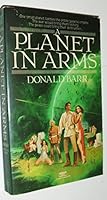
Planet in Arms
$143.79
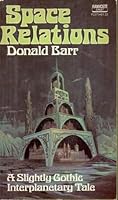
Space relations; a slightly Gothic interplanetary tale
Out of Stock
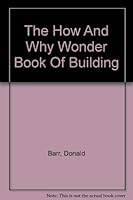
The How And Why Wonder Book Of Building
Out of Stock

The Science Library
Out of Stock

The How and Why Wonder Book of Atomic Energy (The Science Library, Volume III)
Out of Stock

Who Pushed Humpty Dumpty? Dilemmas in American Education Today.
$28.79 - $34.59
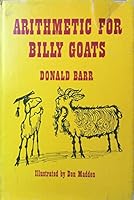
Arithmetic for Billy Goats (Curriculum-Related Books)
$46.99 - $53.69

The Spey: From Source to Sea
Out of Stock

Treasures Kindergarten Unit 1 Teacher's Edition Macmillan/McGraw-Hill
Out of Stock
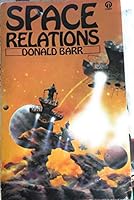
Space Relations
Out of Stock
Space Relations: A Slightly Gothic Interplanetary Tale
Out of Stock
The wonders of prehistoric life
Out of Stock
Author Bio
Questions first, answers built from the ground up
Donald Barr’s work has the feel of a well-stocked workbench: labeled parts, clear diagrams in the mind, and a steady insistence that curiosity is practical. The titles point to a reading experience where a child, or an adult who still likes to take things apart, can move from “What is it?” to “How does it work?” without being talked down to. The promise is in the phrasing: How and Why. Not just facts to memorize, but a chain of reasons across science, engineering, and early human history, big subjects made handleable one explanation at a time.
The “How and Why” approach
Several of Barr’s best-known titles sit inside the long-running How and Why Wonder Book tradition, which takes a daunting topic and breaks it into approachable pieces. These books invite a rhythm: dip in for one question, stay for three more, then close the cover with a head full of new terms that suddenly feel ordinary. In The How and Why Wonder Book of Atomic Energy (The Science Library, Volume III), the subject is modern power at its most abstract: invisible particles, forces you can’t see, consequences you can measure. On the more tactile end is The How And Why Wonder Book Of Building. Building is a word with sawdust in it, implying materials, tools, and the quiet logic of structures that stay up. Then there’s deep time. The how and why wonder book of primitive man points toward early human life reasoned about through evidence and daily necessities: shelter, tools, food, movement, community.
Science as a shelf, not a single subject
Some readers come for one specific topic remembered from childhood. Others come for the broader promise: science as a connected set of ideas rather than a pile of separate units. The Science Library signals that larger organizing impulse, multiple branches of inquiry under one roof. It’s framing that encourages browsing: follow your own questions, then circle back when another topic starts to make sense.
Numbers with a story attached
Some learning books need a little mischief, a narrative nudge that makes the lesson stick. Arithmetic for Billy Goats (Curriculum-Related Books) hints at that approach right in the title. Arithmetic can be dry when it’s only symbols on a page; add Billy Goats, and you expect problems that feel like something: counting, sharing, measuring, comparing. The charm is that it doesn’t pretend math is magic; it suggests math as a tool for sorting out everyday situations, the kind that can be acted out, pictured, and corrected.
What these books feel like to read
A good explanatory book changes what you notice afterward. That’s the quiet pleasure Donald Barr’s titles suggest: you finish a section on building and start looking at doorframes; you read about atomic energy and tell a vague fear from a defined concept. Readers who return to these books want that combination of clarity and scope. The topics are large, but the approach is steady, less about spectacle than about comprehension, the satisfaction of saying, in plain language, what something is and why it works. If you’re looking to buy Donald Barr books, you can find affordable copies on ThriftBooks.
ThriftBooks ® and the ThriftBooks ® logo are registered trademarks of Thrift Books Global, LLC
