


Charlie Kirk
Books by Charlie Kirk
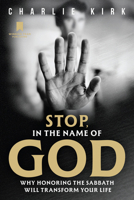
Stop, in the Name of God
$29.51
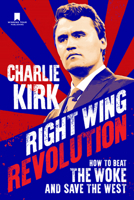
Right Wing Revolution
$18.99 - $25.77

The College Scam
$13.99 - $25.77
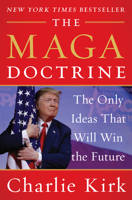
The MAGA Doctrine
$9.19 - $28.70
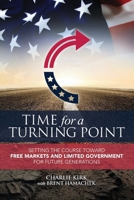
Time for a Turning Point
$11.49 - $22.41

Campus Battlefield
Out of Stock

The Second Amendment and Hunting Heritage
Out of Stock
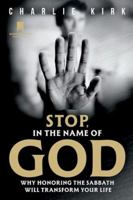
Stop in the Name of God: WHY HONORING THE SABBATH Will TRANSFORM YOUR LIFE
Out of Stock

Stop In The Name Of God: Why Honoring the Sabbath Will Transform Your Life
Out of Stock

Halloween Color By Number Book For Toddlers: Halloween Color By Number, Coloring And Activity Book For Kids Ages 4-12
Out of Stock
Author Bio
Arguments built for the lecture hall and the kitchen table
Charlie Kirk’s books read like public debate sharpened into chapters. The titles announce their targets up front, naming universities, the West, the Sabbath, and a political doctrine, and the pages move with that same forward momentum: claim, evidence, counterclaim, rebuttal. For readers wondering whether Charlie Kirk wrote a book, the answer is plainly yes, and more than one. The widely circulated titles include at least five: Time for a Turning Point, The MAGA Doctrine, The College Scam, Right Wing Revolution, and Stop, in the Name of God.
Politics as a system
The MAGA Doctrine signals a desire to define. Doctrine is a strong word; it suggests a coherent set of beliefs rather than a mood or a slogan. Right Wing Revolution carries that impulse into a more combative frame, where “how to beat” announces strategy and “save the West” raises the stakes to civilizational scale. The College Scam narrows the lens to a single institution and treats it as both economic machine and cultural engine. The double charge, bankrupting and brainwashing, implies two kinds of harm: money and mind. The word scam matters too, suggesting deception, which changes the tone from lament to prosecution.
First principles and the long view
Not every Kirk title is pitched at the same decibel. Time for a Turning Point reads, even in its subtitle, like an attempt to step back from the daily skirmish. “Setting a course” is navigational language, and “future generations” pushes the horizon out. The focus is the architecture of governance: free markets, limited government, and the idea that policy is not just a lever but a legacy. These titles share a consistent interest in systems, in how institutions shape citizens and how a movement tells its own story.
Religion as practice
Stop, in the Name of God stands out because it asks for a change in rhythm. The Sabbath is not abstract here; it’s a practice with a calendar attached. The verb Stop is blunt, almost physical, like a hand on the shoulder. Where the political books imply speed, this one implies restraint and repetition, week after week. A reader may come to Kirk for politics and stay for a different argument: that life is deformed by constant motion, and that honoring a day of rest is corrective rather than quaint.
What these books feel like to read
Kirk’s titles promise directness, and that shapes the experience. These are books that speak in declarative sentences, name opponents, define terms, and stack reasons. The implied setting is public: a debate stage, a classroom argument, a family conversation circling the same pressure points. Readers who enjoy this mode usually want a framework that organizes a messy moment into categories that hold, language that travels into conversation, and a plan with clear priorities. Taken together, the titles sketch an itinerary from public life to private discipline and back again. If you’re looking to buy Charlie Kirk books, you can find low-cost copies on ThriftBooks.
ThriftBooks ® and the ThriftBooks ® logo are registered trademarks of Thrift Books Global, LLC
